Establishing Respondent Bad Faith Through Negotiation Evidence
Documenting aggressive sale offers is often the most direct path to proving bad faith under Paragraph 4(b)(i) of the UDRP Policy. This history transforms private correspondence into a powerful asset for resolving domain name disputes through strategic evidence.
How to document domain name brokerage offers
Establishing a reliable chain of custody is essential to prevent respondents from disputing the authenticity of an offer. We will examine the technical capture of digital records and the specific role of third-party brokerage communications.
Technical standards for capturing digital offers

Admissibility in UDRP proceedings hinges on the integrity of your digital records. Panels frequently dismiss screenshots that lack context or timestamps, as sophisticated respondents may claim the evidence was fabricated or altered. To satisfy the evidentiary burden of showing that a domain was registered and used in bad faith, you must preserve the technical metadata that verifies the sender’s identity and the timing of the communication.
- Capture full email headers to reveal the originating IP address and mail server routing.
- Use professional screenshot tools that automatically embed URLs and system timestamps into the image file.
- Preserve the original .eml or .msg files rather than just forwarding messages to your legal counsel.
- Record the landing pages of domain brokers or parking sites using web archiving tools to prevent content deletion.
- Document the WHOIS history and any changes in registrar records that coincided with the negotiation period.
To ensure panels accept the submission, follow this 5-step technical checklist: (1) use screenshot tools with visible system timestamps; (2) preserve full, unedited email headers; (3) capture the domain’s public history via Archive.org captures; (4) document all communications through intermediaries to reveal shielded identities; and (5) maintain a chronological log of all negotiation attempts. Adhering to these standards is essential for documenting domain brokerage offers and establishing an undeniable record of bad faith.
Related topic reference: Documenting domain squatter extortion emails effectively.
The role of third-party broker communications
Intermediary platforms like Sedo or GoDaddy Auctions act as facilitators, but their automated notifications do not insulate a registrant from liability. When evaluating proof of a respondent’s intent, panels distinguish between system-generated placeholders and manual configurations. A high “Buy It Now” price set by the owner is typically treated as an active offer to sell, even if the domain is otherwise “passively” parked. According to the WIPO Overview 3.0 (Section 3.1.1), the context of the listing—specifically its timing relative to a brand’s registration—is a primary factor in determining if the broker was used to target a specific trademark holder.
To differentiate between neutral platform behavior and bad-faith intent, use the following verification checklist when you document domain name brokerage offers:
| Indicator | Platform Default (Neutral) | Respondent-Defined (Bad Faith) |
|---|---|---|
| Pricing Model | Generic “Make Offer” or “For Sale” banners with no specific amount. | Custom “Buy It Now” prices (e.g., $5,000+) manually set by the user. |
| Listing History | Continuous listing since the date of registration. | Price spikes or new listings immediately following a Complainant’s IPO or product launch. |
| Broker Outreach | Automated “domain for sale” newsletters sent to thousands. | Broker-initiated contact specifically targeting the brand owner’s employees. |
The “Auto-Pilot” Fallacy: A Typical Mistake
A common respondent defense is claiming that a high sales price was an “automated suggestion” by the registrar. However, UDRP panels generally reject this if the respondent had to click an “accept” or “confirm” button to publish the price. For instance, in several cases involving our clients, we successfully argued that a respondent’s choice to opt into a “Premium Listing” service constituted an active offer to sell for profit under Paragraph 4(b)(i). Because these technical nuances can be the difference between winning and losing, professional oversight of Domain Name Disputes is recommended to preserve forensic evidence of manual price adjustments.
Disclaimer: This information is for educational purposes and is not legal advice. Outcomes depend on specific evidence and panel interpretation.
Related topic reference: How to document domain name brokerage offers.
Proving bad faith through extortionate price demands
This analysis examines financial benchmarks defining cybersquatting. We investigate the distinction between recovering legitimate out-of-pocket costs and demonstrating profit-driven intent, alongside the legal weight of receiving unsolicited sales offers from registrants.
Distinguishing out-of-pocket costs from profit intent
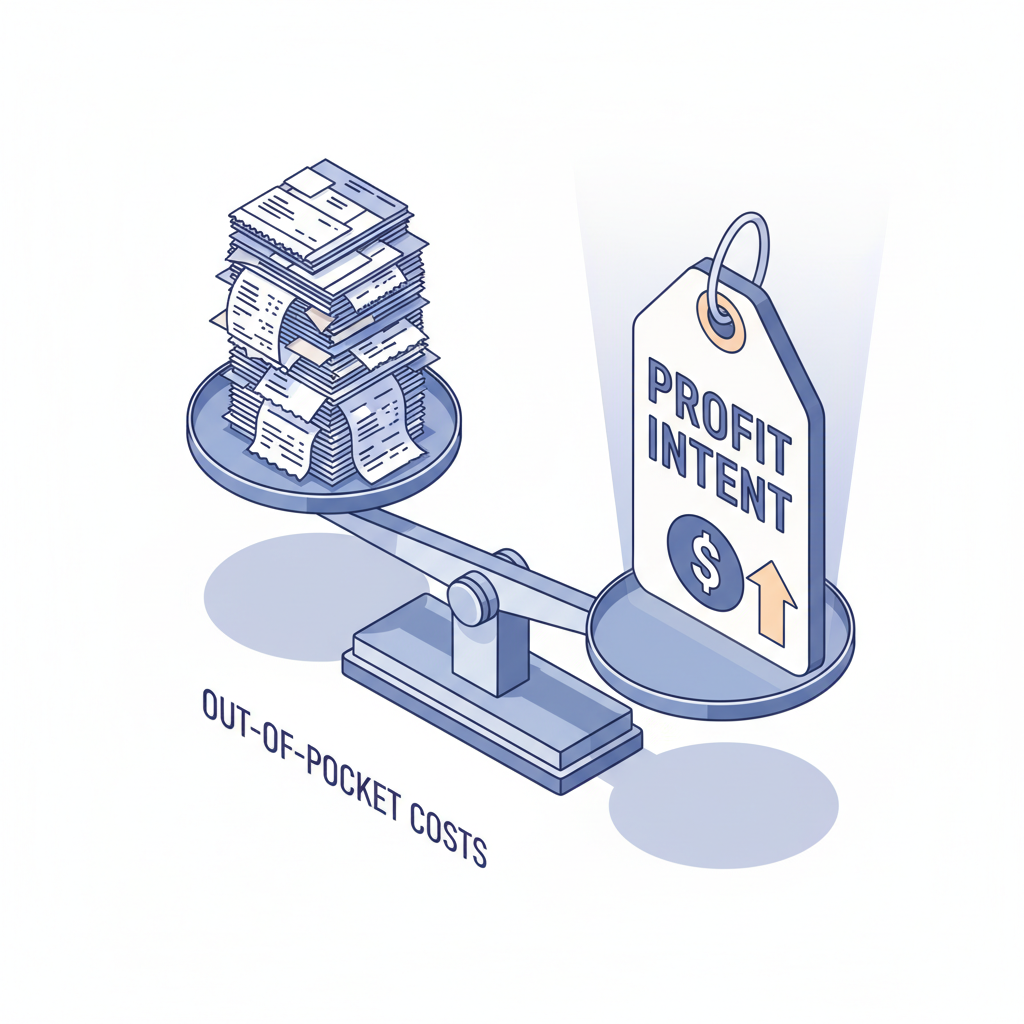
UDRP Paragraph 4(b)(i) defines bad faith as the acquisition of a domain primarily for the purpose of selling it for “valuable consideration in excess of documented out-of-pocket costs directly related to the domain name.” In practice, panels at the WIPO Arbitration and Mediation Center strictly interpret these costs. While registration and multi-year renewal fees are standard, panels are notoriously skeptical of development costs, often viewing invoices as pretextual unless the site is highly functional. Consequently, respondents often fail to justify high asking prices when they attempt to include “opportunity costs,” subjective labor value, or speculative future earnings that have no basis in actual business operations.
To distinguish a professional domainer from a cybersquatter, panels evaluate whether the price is tied to the domain’s generic utility or the trademark’s specific reputation. Good faith pricing is often characterized by offers reflecting the generic market value of a keyword or simple cost-recovery. In contrast, bad faith is signaled by demands calibrated to the complainant’s revenue, round-number demands (e.g., $100,000) with no supporting financial records, or “compensation” requests for loss of hypothetical business. When proving domain was bought in bad faith via WHOIS records, the massive gap between a low-cost acquisition and a subsequent extortionate demand serves as a primary indicator of profit intent.
Navigating these financial nuances is a core component of Domain Name Disputes. Evidence of bad faith pricing becomes most compelling when the respondent initiates contact, as the act of making an unsolicited offer is often the primary trigger used to establish bad faith intent. While a high asking price—on its own—does not always guarantee a bad faith finding for generic dictionary terms, the solicitation itself, when combined with a lack of a functional website or credible business plan, usually tips the scales toward a transfer or cancellation order.
Related topic reference: Proving domain was bought in bad faith via WHOIS.
The impact of unsolicited sales offers
While the distinction between a respondent’s legitimate out-of-pocket costs and a clear profit-seeking motive provides the financial framework for a dispute, the origin of the negotiation often dictates the final ruling. When a registrant initiates contact to offer a domain for sale without any prior inquiry from the trademark owner, panels frequently interpret this as definitive proof of targeting. This proactive outreach serves as a cornerstone of udrp evidence of respondent’s bad faith, as it suggests the domain was registered or acquired with the primary intent of ‘flipping’ it to the holder of the corresponding intellectual property.
In my experience, respondents often try to mask their intent behind a ‘polite’ or ‘helpful’ inquiry, suggesting they noticed the company doesn’t own the .com and are offering it as a courtesy. Do not be misled by the tone; under the UDRP, the mere act of an unsolicited offer to sell a domain to a trademark owner for a price exceeding registration costs is frequently enough to establish bad faith registration and use.
The timing of these offers is equally critical. If a respondent acquires a domain name immediately following a high-profile product launch or a merger announcement and then reaches out to the brand owner, the inference of bad faith becomes nearly impossible to rebut. These sales offers are not viewed in isolation but are analyzed alongside the respondent’s lack of any functional website or credible business plan. When a squatter provides a price quote that is clearly calibrated to the perceived depth of the complainant’s pockets rather than the generic value of the alphanumeric string, they effectively confirm that the domain’s only ‘value’ to them was its potential as an instrument of extortion. Documenting the sequence of these communications is essential, as the shift from an unsolicited greeting to a specific five-figure demand often marks the moment a respondent’s case collapses. This leads directly into the complexities of how these communications are viewed when marked with legal confidentiality labels.
Admissibility of ‘Without Prejudice’ settlement communications
This section examines the admissibility of settlement communications and explains why standard confidentiality labels fail to shield a respondent, while outlining how to structure your final evidence package for maximum impact.
Why standard confidentiality labels fail in UDRP
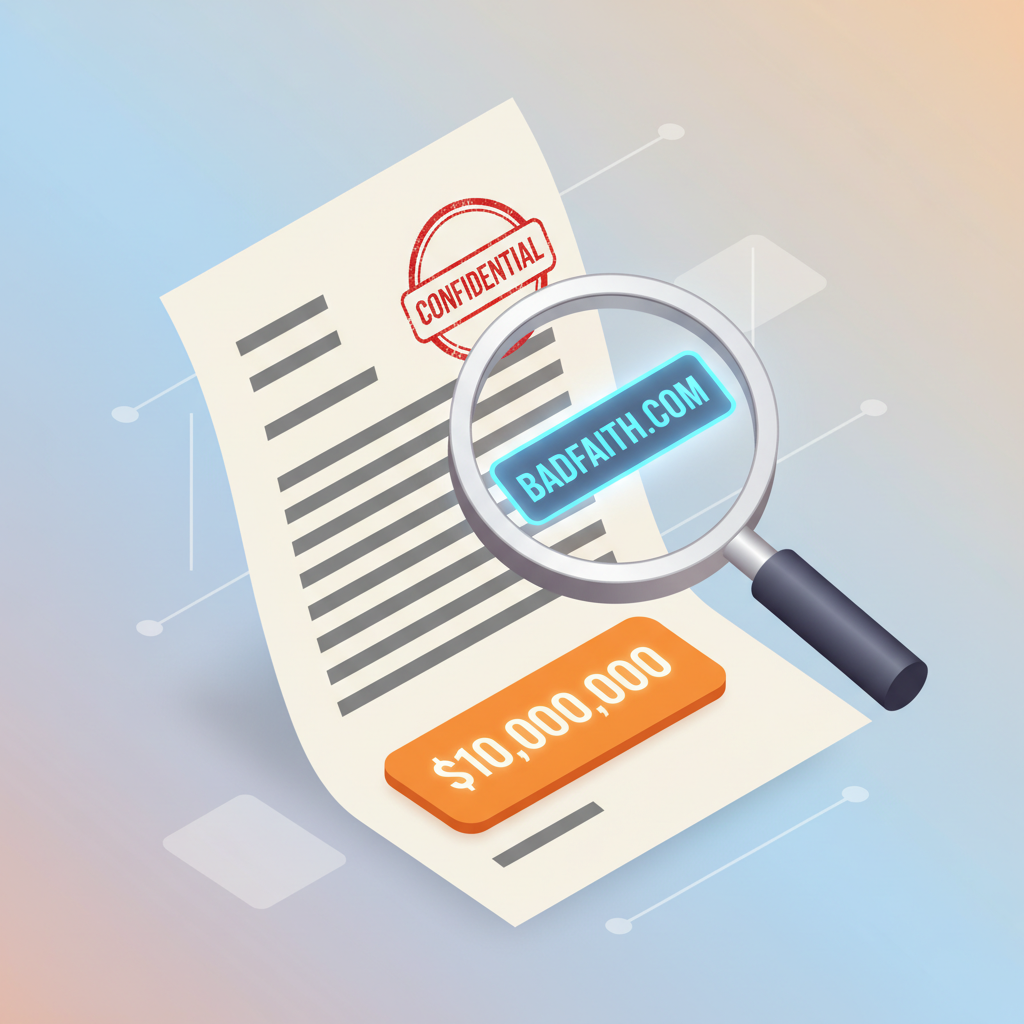
The misconception that “Without Prejudice” headers provide an absolute shield is a frequent tactical error in domain disputes. While national court systems often exclude settlement talks to encourage compromise, WIPO Overview 3.0, Section 3.6 clarifies that panels may consider such communications to determine if a domain was registered or used in bad faith. The need to uncover animus furandi (intent to profit) overrides traditional litigation privileges.
Admissibility Checklist: When Labels are Disregarded
- ✔️ Price Pivot: The offer exceeds documented out-of-pocket costs, a key indicator of bad faith that typically bypasses standard confidentiality headers.
- ✔️ Threat Components: The communication includes threats to sell to a competitor or launch a disparaging site.
- ✔️ Unsolicited Outreach: The respondent initiated the sale offer despite the “confidential” header.
- ✔️ Bad Faith Evidence: The panel determines the label is being used as a cloak to mask cybersquatting.
Scenario: Piercing the Confidentiality Shield
Before: A respondent in the fintech sector claimed they registered a domain for a legitimate startup. During mediation, they sent an email marked “Strictly Confidential & Without Prejudice” demanding $50,000. They believed this demand was legally invisible and could not be used as udrp evidence of respondent bad faith.
After: Our team submitted the full unredacted chain. The respondent’s motion to strike the evidence was denied because the panel prioritized transparency regarding the respondent’s primary purpose. By admitting the “hidden” offer, the panel confirmed the intent was sale-for-profit rather than legitimate use, leading to a transfer of the domain.
Strategic preservation of these exchanges is essential for building a successful claim. Even if a registrant attempts to hide behind legal jargon, their commercial demands often serve as the strongest proof of targeting. Professional management of Domain Name Disputes ensures these nuances are leveraged correctly to expose extortionate intent behind procedural labels, while also safeguarding against Reverse Domain Name Hijacking (RDNH).
Disclaimer: This information is for educational purposes and does not constitute legal advice. UDRP outcomes vary based on panel interpretation and specific case facts.
Strategizing the final UDRP evidence package
Packaging the full sequence of interactions requires more than just attaching email threads to a filing. A successful complaint connects the respondent’s demands to the exact moment they became aware of your brand’s existence. This temporal link serves as the foundation for udrp evidence of respondent bad faith, demonstrating that the domain was not chosen by coincidence but specifically to target your intellectual property assets.
When synthesizing these records, we focus on the behavior of the respondent rather than just the final price. If their demand shifted upward once they realized they were speaking to a large corporation, that delta is high-value proof of a profit-seeking motive.
The following timeline illustrates how to align negotiation milestones with the legal requirements of the UDRP:
- Phase 1: Trademark Benchmarking. Map your earliest trademark use or filing date against the respondent’s acquisition date to disprove any “prior rights” claims.
- Phase 2: The Unsolicited Hook. Document the initial outreach, emphasizing that the respondent sought out the brand owner, which suggests the domain was registered with a specific target in mind.
- Phase 3: The Extortionate Pivot. Capture the moment an inquiry turns into a specific demand that clearly exceeds reasonable registration and out-of-pocket costs.
- Phase 4: Comparative Proof. Submit evidence showing the respondent’s pattern of registering other trademark-related domains to prove they are a serial squatter.
Structuring interactions this way ensures that the panel sees the commercial animus behind the respondent’s actions, effectively turning negotiations into your strongest UDRP asset.
For help with this task, use the Domain Name Disputes service.
Turning Negotiations Into Your Strongest UDRP Asset
Securing a transfer depends on your ability to frame the domain’s history as a pattern of targeting rather than a coincidental registration. While the burden of proof rests on the complainant to demonstrate a clear profit motive, a meticulously documented negotiation record provides the most objective udrp evidence of the respondent’s bad faith. Professional legal oversight ensures that these communications remain admissible and that you avoid procedural traps that could compromise your brand’s IP assets. Seek a comprehensive case evaluation for your domain name disputes to turn squatter tactics into your strongest legal advantage.
Frequently Asked Questions
Is it possible to prove bad faith if the domain owner refuses to engage in negotiations or remains silent?
Yes. While active negotiation is strong evidence, the concept of “passive holding” allows panels to find bad faith even in the absence of direct communication. Based on the Telstra Corp Ltd v. Virtual Community precedent, panels consider the totality of circumstances.
- Trademark Reputation: If the trademark is so famous that it is inconceivable the respondent was unaware of it.
- Lack of Response: The respondent’s failure to provide any evidence of actual or contemplated good-faith use.
- Concealment: The use of false contact details or the failure to update WHOIS information to avoid being reached.
In these cases, the very act of holding the domain without a plausible legitimate purpose is interpreted as bad faith under the UDRP.
How does a ‘pattern of conduct’ influence a UDRP panel’s decision regarding bad faith?
Under UDRP Paragraph 4(b)(ii), bad faith is evidenced if a respondent registers a domain name to prevent the trademark owner from reflecting the mark in a corresponding domain, provided there is a “pattern of such conduct.” This is a powerful tool for complainants because it shifts the focus from a single registration to the respondent’s broader history.
A pattern is typically established by showing that the respondent has been a losing party in multiple previous UDRP cases or holds a portfolio of domains targeting other well-known trademarks. Documenting these previous losses and the respondent’s wider portfolio through tools like reverse WHOIS lookups can significantly strengthen a Domain Name Dispute filing.
Can the use of a privacy or proxy service by the respondent be used as evidence of bad faith?
While using a privacy service is not bad faith per se—as many legitimate owners value privacy—it can become a critical secondary indicator of bad faith. According to WIPO Overview 3.0, panels often view the use of such services negatively if they are employed to frustrate the proceeding or conceal the respondent’s identity after a dispute has been initiated.
If a respondent switches to a privacy proxy immediately after receiving a cease-and-desist letter, panels generally interpret this as an attempt to evade trademark enforcement. When combined with a lack of bona fide website content, the use of a proxy often supports the inference that the registration was made with a targeting intent.
If I initiate the first contact to buy the domain, does that hurt my chances of proving bad faith?
Not necessarily, but it requires a careful strategic approach. Respondents frequently argue that a complainant’s offer to purchase the domain is proof that the domain has legitimate “market value” and that the complainant is acting in bad faith. However, UDRP panels generally recognize that trademark owners may attempt to settle disputes commercially to avoid the costs of a formal complaint.
To protect your position, ensure that any outreach is documented as an attempt to resolve a trademark infringement rather than a standard commercial inquiry. If the complainant makes a reasonable offer and the respondent counters with an astronomical, non-negotiable price, the panel will likely view the respondent’s counter-offer as evidence of bad faith, rather than blaming the complainant for starting the talk.
Can bad faith be established if the domain was registered before the trademark was officially registered?
This is a complex area of UDRP practice. Generally, a respondent cannot act in bad faith toward a mark that did not exist at the time of registration. However, there are two primary exceptions where panels may still find bad faith:
- Anticipatory Cybersquatting: If the respondent registered the domain just before a highly publicized brand launch, product announcement, or merger, panels may conclude the respondent intended to capitalize on the upcoming mark.
- Common Law Rights: If the complainant can prove they had significant “unregistered” trademark rights and public recognition before the domain was purchased, the lack of a formal certificate at that time is not a defense for the respondent.
The timing of the acquisition relative to the “public birth” of the brand is the decisive factor in these scenarios.
What is the impact of ‘domain parking’ with pay-per-click (PPC) links on a bad faith claim?
Domain parking is one of the most common indicators of bad faith use under UDRP Paragraph 4(b)(iv). If a respondent uses a domain to host PPC links that redirect users to competitors of the trademark owner, it demonstrates an intent to profit from “initial interest confusion.”
Panels have consistently held that the respondent is responsible for the content on their website, even if the links are automatically generated by a third-party registrar or parking service. If the links are related to the complainant’s industry, it serves as strong evidence that the domain was registered specifically to exploit the goodwill of the trademark for advertising revenue.