Mastering WIPO Evidence Standards for Domain Disputes

WIPO panels frequently reject complaints when entrepreneurs provide insufficient or disorganized evidence, effectively ending their chances before they begin. This guide outlines the technical documentation standards necessary for preparing domain dispute evidence for WIPO, serving as a gateway to our broader UDRP evidence checklist.
Understanding WIPO’s Evidentiary Expectations

Navigating the procedural rigor of WIPO requires bridging the gap between general UDRP mandates and the document-heavy reality of a formal complaint. Our team at Domain Name Disputes helps clients align their evidentiary submissions with these strict expectations to prepare for the subsequent requirements regarding the burden of proof and submission standards.
The Burden of Proof Requirements
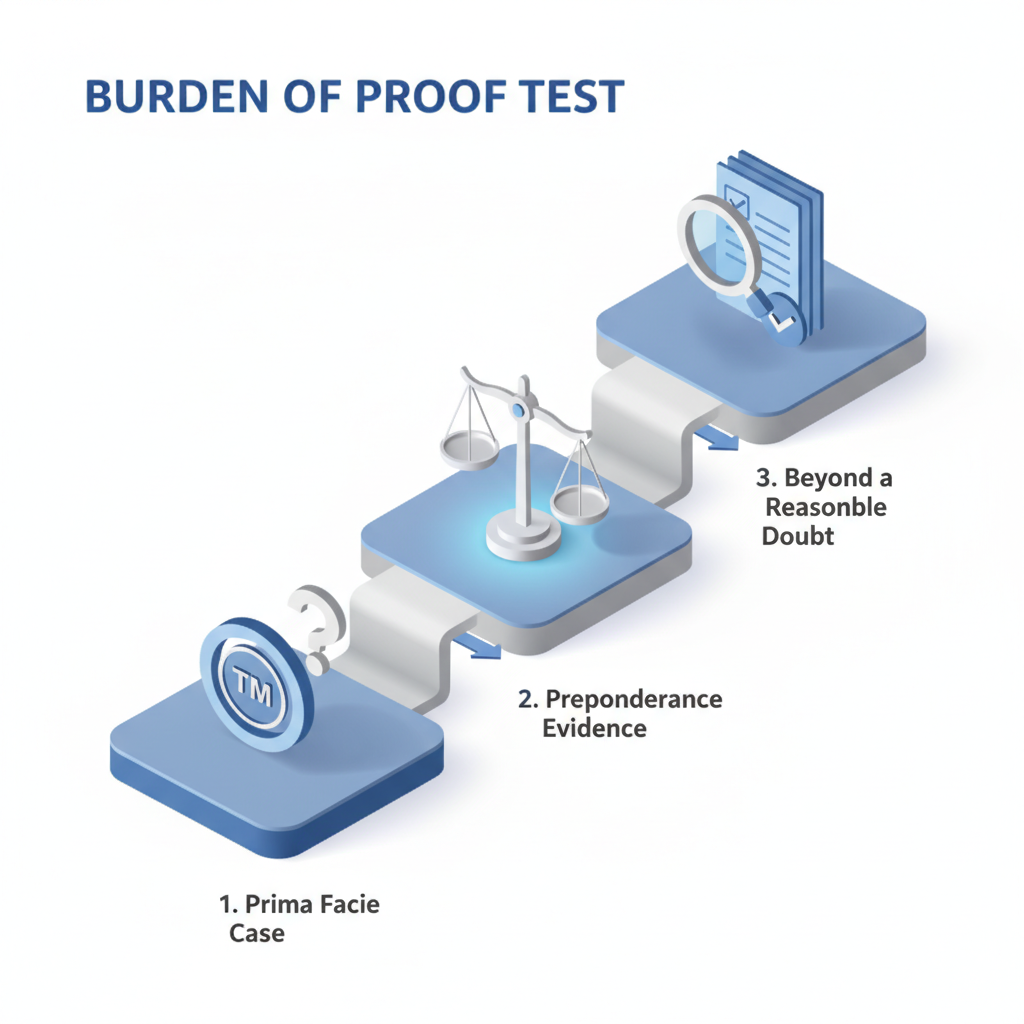
To succeed in a UDRP proceeding, the complainant must satisfy the three-part test outlined by the ICANN Uniform Domain-Name Dispute-Resolution Policy. The burden of proof rests entirely on the complainant to demonstrate: (i) identical or confusing similarity to a trademark; (ii) the respondent’s lack of rights or legitimate interests; and (iii) bad faith registration and use. A common pitfall for entrepreneurs is treating the third prong as a moral judgment; however, panels require objective evidence of opportunistic conduct, such as patterns of cyber-squatting or documented attempts to sell the domain at an inflated price.
| Evidence Type | Sufficient Proof | Insufficient Proof |
|---|---|---|
| Trademark Rights | Certified trademark registry extracts | Marketing materials without formal registration |
| Legitimate Interest | Documentation of prior bona fide commercial use | Mere assertions of respondent inactivity |
| Bad Faith | Objective evidence (e.g., archived site content or WHOIS history) | Unsubstantiated allegations of malice |
For instance, relying on a screenshot of an empty page is rarely sufficient to prove bad faith; instead, submitting archived HTML or meta-tag analysis provides the technical verification panels require. If you require expert support, our Domain Name Disputes service offers strategic guidance on navigating these evidentiary hurdles, subject to the panel’s assessment of specific case facts and current WIPO trends.
Professionalism in Document Submission
Panels expect submissions that balance precision with brevity. A cluttered or disorganized filing often suggests that the complainant lacks a clear grasp of their case, which can undermine the credibility of the underlying claim. When preparing domain dispute evidence for WIPO, prioritize quality over volume; one verifiable document—such as a certified registration extract—is significantly more effective than a collection of ambiguous or loosely relevant screenshots.
To maintain professional standards, integrate your evidence with structural discipline. Rather than submitting dozens of disparate files, merge exhibits into a single, searchable PDF or a systematically indexed document suite, ensuring that the total file size remains within the WIPO Arbitration and Mediation Center’s limits (typically 10MB per file). Apply consistent, descriptive naming conventions (e.g., Annex_1_Trademark_Registration.pdf) and use neutral captions to annotate images or evidence of bad faith. Avoid inserting argumentative commentary within the exhibit files themselves, as the panel expects analysis to be reserved for the written complaint. By streamlining your documentation, you assist the panel in navigating the facts, allowing them to focus on the merits of your domain name dispute. This procedural clarity aligns with the WIPO Supplemental Rules, which emphasize the efficient administration of proceedings.
Structuring Your Evidence Bundle
Effective preparation requires more than gathering raw files; it demands a logical architecture that guides a panel through your argument. You will soon organize your materials using a systematic index and electronic exhibits.
The Evidence Master Index
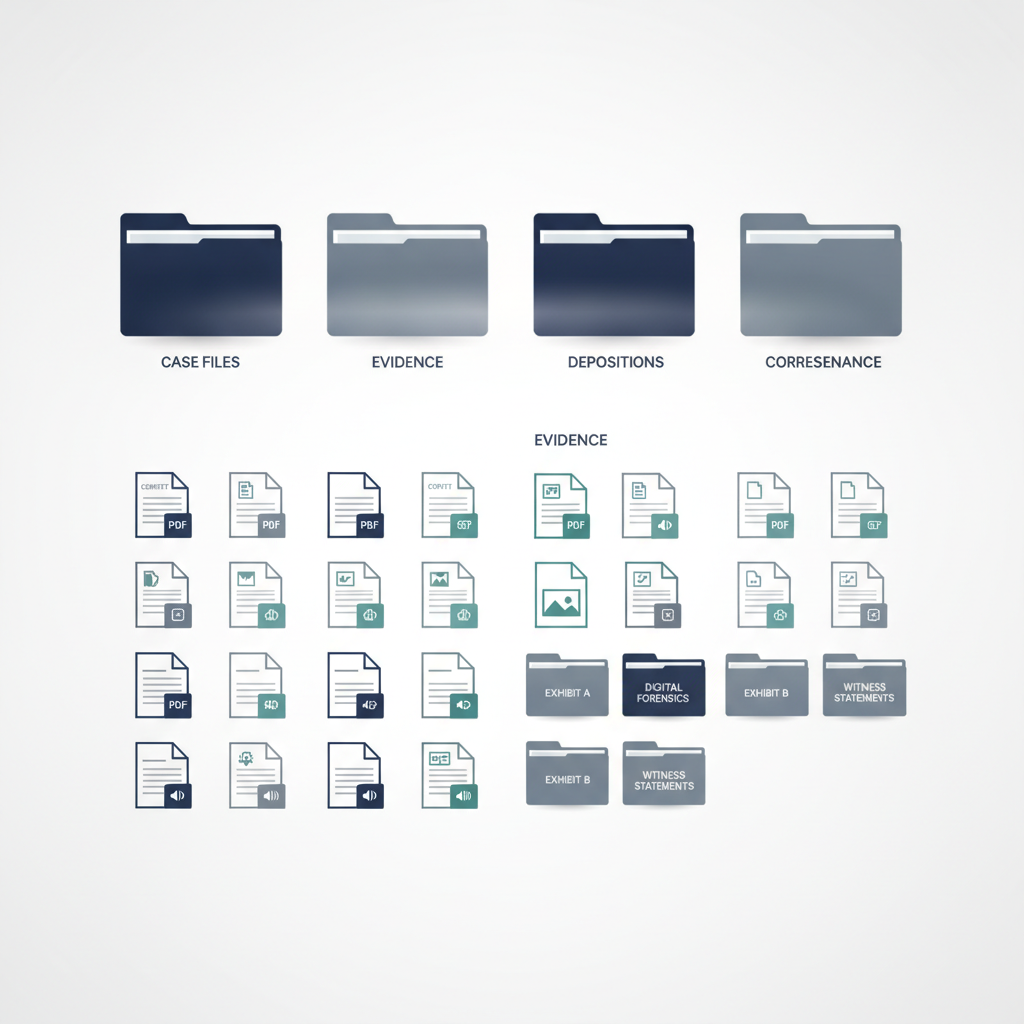
The Evidence Master Index acts as the definitive roadmap for your submission, ensuring panelists can identify the legal relevance of any document within seconds. Without this structure, even robust evidence may be overlooked or dismissed as supplemental.
A professional index must serve as the first page of your evidence bundle. Rather than organizing by file creation date, group exhibits logically to guide the panel through your case narrative. For those navigating the complexities of these requirements, professional domain name dispute resolution services can assist in ensuring your evidentiary pillars are properly aligned.
To maintain clarity for the adjudicator, implement these organizational standards:
- Categorization: Explicitly group all supporting documents to reflect the key arguments of your submission.
- Thematic Sequencing: Arrange documents within each section to show a logical progression—for example, contrasting your established trademark usage against the respondent’s domain acquisition date.
- Navigational Integrity: In electronic submissions, replace static lists with hyperlinked index entries that allow the panel to jump directly to the relevant exhibit, eliminating manual scrolling and potential confusion.
This transparency is vital for ensuring your submission is both accessible and persuasive. Once the Master Index is established, your next focus should be on ensuring that individual digital exhibits—such as WHOIS snapshots and archived website content—are authenticated and formatted to meet WIPO’s strict technical requirements.
Managing Electronic Exhibits Effectively
When capturing digital exhibits for domain disputes, panels prioritize high-fidelity evidence that leaves no room for ambiguity. Screenshots must clearly display the full URL in the browser’s address bar, a visible timestamp, and the entire page layout—including critical elements like footers or contact forms that often reveal a respondent’s commercial intent. For sites with dynamic content, static images are frequently insufficient; capturing the page’s source code or generating a full-page PDF ensures that the technical context of the infringing site is preserved for the examiner.
A critical insight for any claimant: historical snapshots via the Internet Archive’s Wayback Machine serve as essential evidence for establishing a pattern of conduct. These verifiable trails effectively counter defenses that a site was merely a temporary placeholder or under construction, providing objective data on how the domain was utilized over time.
Managing this documentation effectively is a cornerstone of a credible complaint. Our team provides professional support in structuring evidence bundles, ensuring that your submission aligns with the procedural expectations outlined in the WIPO Domain Name Dispute Resolution Guide. By organizing your exhibits to explicitly address the respondent’s lack of legitimate interest and evidence of bad faith, you significantly enhance the clarity and impact of your case.
Proving Bad Faith with Data
Shifting from administrative organization to substantive proof, we now examine how to articulate a compelling narrative of malicious intent. We will analyze the data points necessary for tracking traffic patterns and documenting trademark misuse.
Tracking Domain Use and Traffic

Establishing bad faith requires demonstrating that a respondent’s pattern of conduct targets your brand for commercial gain. Under the ICANN UDRP policy, panels look for evidence of “opportunistic bad faith,” which is often uncovered by mapping a registrant’s historical behavior. Rather than relying on static screenshots, successful submissions reconstruct the respondent’s activity through technical artifacts that show a deliberate intent to mislead.
When investigating, compare the current site architecture against your own to document deceptive similarities. If the respondent is using the domain for pay-per-click (PPC) advertising or mirroring your site’s contact forms, these serve as objective markers of bad faith.
| Data Point | Evidence Artifact | Purpose |
|---|---|---|
| WHOIS History | DomainTools/Registrar Archive | Identify a pattern of “cybersquatting” across multiple marks. |
| DNS Records | Zone file snapshots/A-record history | Verify site redirection to competitor or phishing pages. |
| Live Site Usage | WARC files or authenticated PDFs | Detect meta-tag cloning or unauthorized use of protected logos. |
Common Pitfall: A frequent mistake is submitting only current screenshots of a site that may have already been scrubbed of incriminating content. Always capture and store historical snapshots (e.g., via the Wayback Machine or domain-specific archives) at the first sign of dispute to ensure the panel sees the site as it existed during the period of alleged misuse.
Documenting Trademark Misuse
While tracking traffic patterns identifies potential infringements, proving trademark misuse requires documented evidence that a registrant is actively exploiting your brand identity. Under WIPO Arbitration and Mediation Center procedural standards, panels prioritize artifacts that demonstrate intent over subjective claims of confusion. A robust evidence bundle must effectively bridge the gap between static domain registration and active, harmful usage.
To avoid common pitfalls during submission, entrepreneurs should distinguish between superficial indicators and technical markers. The following checklist summarizes how to transition from weak, anecdotal evidence to an airtight submission:
- Beyond Screenshots: Instead of simple browser captures, submit full-page, time-stamped PDFs that include the URL and date of access.
- Technical Footprints: Panels look for hard data, such as meta-tags referencing your trademark, mirrored site footers, or contact forms that harvest user data to impersonate your business.
- Verification: Ensure all digital captures are accompanied by a formal declaration or affidavit affirming the authenticity of the files to preempt challenges regarding evidence tampering.
Moving From Preparation to Filing
Securing a favorable UDRP decision hinges on the quality of your evidence, which must move beyond basic screenshots to include verifiable data like DNS history and source-level intent indicators. While building a case requires meticulous organization, the transition from gathering proof to formal filing is where strategy meets technical compliance. Before submission, confirm that your evidence folder is structured to effectively demonstrate the core pillars of bad faith registration, rights, and a lack of legitimate interests. For those requiring expert assistance with these complex evidentiary requirements, our professional team is available to manage the filing process and ensure your documentation aligns with WIPO standards.
For help with this task, use the Domain Name Disputes service.
Frequently Asked Questions
What is the typical timeline for a WIPO UDRP proceeding, and does my evidence need to be ready before filing?
A typical UDRP proceeding generally takes about 60 days from the appointment of the Administrative Panel to the issuance of a decision. Because the window for submitting evidence is strictly defined by the WIPO Rules, you must have your entire evidentiary record finalized before the formal Complaint is submitted.
Key considerations for timing:
- Initial Submission: You generally do not have an opportunity to introduce new evidence after the initial filing unless specifically requested by the Panel.
- Response Period: The Respondent has 20 days to file a Response, which may include counter-evidence, meaning your initial filing must be comprehensive enough to anticipate potential defenses.
- Administrative Compliance: Before the case reaches a Panel, the WIPO Center performs a compliance review. Incomplete or poorly organized evidence can lead to administrative deficiencies, which may delay the commencement of the case.
Engaging professional services such as Domain Name Disputes early in the process ensures that your evidence is curated to withstand scrutiny within these tight procedural deadlines.
How do WIPO panels weigh evidence of ‘passive holding’ in bad faith claims?
When a domain name is not actively being used for a website, Panels look for evidence of passive holding to satisfy the third prong of the UDRP (bad faith registration and use). Evidence of bad faith in these instances often requires a broader investigative approach than active sites.
Crucial evidence for passive holding includes:
- Registration Patterns: Historical WHOIS data showing a pattern of similar registrations by the same entity.
- Offer to Sell: Correspondence or archived pages where the registrant offers the domain for sale at an amount clearly in excess of out-of-pocket costs.
- Concealment: Evidence of attempts to hide the registrant’s identity or the use of false contact information.
- Trademark Prominence: Proof that your trademark is so distinctive that it is implausible the domain was registered for any reason other than to target your brand.
Are there specific document file types or technical constraints I should follow for my WIPO submission?
WIPO has strict technical standards to ensure that all panelists and parties can access the file. While your content is paramount, the technical format is a prerequisite for admissibility.
Technical submission standards:
- File Size: Each individual file must not exceed 10MB. If you have large evidence bundles, you must split them into logical, named parts (e.g., Annex_1_Part_A.pdf, Annex_1_Part_B.pdf).
- File Format: PDF is the standard. Ensure that the PDFs are text-searchable (OCR) to assist the Panel in navigating large volumes of documents.
- Naming Conventions: Use a descriptive, consistent naming convention. Avoid generic filenames like scan001.pdf; instead, use labels like Annex_4_Web_Archive_2023.pdf.
- Accessibility: Avoid password-protected files or proprietary formats that might require specialized software, as these will be rejected during the administrative review.
Can I use ‘Wayback Machine’ snapshots as definitive proof of a domain’s past content?
Yes, the Internet Archive’s Wayback Machine is a widely accepted tool in UDRP proceedings, but it is not infallible. Panels value these snapshots, but they require context to be considered high-fidelity evidence.
Best practices for using web archives:
- Don’t rely on a single link: Include the full URL and the specific timestamp of the snapshot.
- Provide context: Explain what the snapshot shows in your Complaint text—for example, if it shows a fake store using your logo, explicitly point out the specific visual similarities.
- Cross-reference: If possible, pair the snapshot with other evidence, such as DNS records from the same timeframe, to prove the site was under the control of the Respondent.
- Check for broken elements: Sometimes archived pages fail to load images or CSS. If a screenshot looks broken, clarify that it is an archival artifact so the Panel does not mistake it for a placeholder site.
What happens if my evidence is deemed insufficient by the Panel?
If the evidence provided is insufficient to meet the three-part UDRP test, the Panel will typically deny the complaint (often referred to as ‘denying the transfer’). Unlike some legal proceedings, you generally do not get a ‘do-over’ to fix your evidence later.
The consequences of insufficient evidence include:
- Denial of Transfer: The respondent retains the domain name.
- Finding of Reverse Domain Name Hijacking (RDNH): If the Panel determines the complaint was brought in bad faith or primarily to harass the domain holder, they may make a formal finding of RDNH, which can damage the reputation of the complainant and potentially expose them to legal repercussions.
- Resource Loss: You will lose the administrative fees paid to the provider and any costs associated with the filing process.
Because the stakes are high, ensuring that every element of the test—trademark rights, lack of legitimate interest, and bad faith—is supported by verified, admissible documentation is vital before the Complaint is sent.