Mastering the UDRP: A Strategic Framework
Securing a domain through the UDRP is a precision-driven legal battle, not a simple administrative task. Success requires meeting three specific ICANN pillars, and this guide prepares you for every stage from evidence gathering to final adjudication.
Recognizing Common Mistakes in UDRP Evidence
Even a strong case can fail due to evidentiary gaps. We will now examine how to avoid procedural dismissals by addressing common mistakes in UDRP evidence before refining your formal submission strategy.
Critical Documentation Failures to Avoid

The foundation of a successful recovery depends on documenting your prior rights and the registrant’s behavior with precision. A complaint must do more than just assert ownership; it must provide verifiable proof that the disputed domain was registered and is being used in bad faith. Failing to provide a clear chain of title for a trademark or neglecting to preserve a snapshot of a parked page with infringing links can lead to an immediate administrative denial. Panels do not conduct their own investigations; they rule based solely on the evidence you submit.
Practitioners often face challenges with complex data points, such as historic WHOIS records or substantiating brand reputation. To avoid costly tactical errors, ensure your documentation strictly reflects the evidence-based standards required for a successful domain recovery.
| Common Documentation Error | Correct Procedural Approach |
|---|---|
| Submitting only a trademark application number without a certificate. | Provide the full registration certificate showing current status and ownership. |
| Ignoring the gap between registration and the domain’s creation. | Use historic WHOIS data to prove the registrant knew of your brand at the time of purchase. |
| Vague descriptions of “bad faith” without visual evidence. | Include time-stamped screenshots of the website, including pay-per-click links or sale offers. |
Once you have addressed these technical gaps, the focus shifts to organizing your materials into a compelling narrative for the panel.
Related topic reference: Recognizing Common Mistakes in UDRP Evidence.
Building a Robust Evidence Dossier
Avoiding the common pitfalls of missing documentation is only the first step; the true strength of a case lies in how you organize and present your evidence to the panel. To satisfy the legal requirements for a UDRP complaint, you must transform raw data into a narrative that leaves no room for alternative interpretations regarding the registrant’s motives.
- Trademark Certification: Provide high-resolution copies of registration certificates. If the mark was acquired, include the deed of assignment to prove a clear chain of title.
- Historical Web Presence: Use time-stamped screen captures from the Internet Archive or similar tools to show the domain’s content at the time of registration versus its current state.
- Documented Outreach: Include all correspondence records, such as cease-and-desist letters or evidence of the respondent offering to sell the domain for an amount far exceeding out-of-pocket costs.
- Proof of Reputation: Submit localized analytics, advertising spend reports, or media mentions that establish your brand’s fame in the specific jurisdiction where the respondent operates.
- Evidence of Confusion: Gather actual instances of consumer misdirection, such as misdelivered emails or social media inquiries, to demonstrate that the domain is confusingly similar in practice.
While the technical process might seem straightforward, the financial and strategic investment required to build this dossier often dictates the outcome. Panels operate under a strict “no independent research” rule, meaning if a crucial screenshot of a parked page is missing from your initial filing, you cannot retroactively submit it without exceptional cause. This evidentiary burden makes a methodical approach to filing indispensable for securing a transfer order. Once the dossier is complete, the focus shifts from what the respondent has to why they have it.
Related topic reference: The True Cost of Filing a UDRP Complaint.
Proving Bad Faith in Domain Registration
Establishing the respondent’s intent is the most demanding phase of a dispute. We will now examine how to identify patterns of bad faith and document the registrant’s underlying motives effectively.
Identifying Patterns of Bad Faith

Proving bad faith requires demonstrating the registrant’s intent to exploit your brand’s value. Under the ICANN framework, panels apply both subjective and objective tests to determine if the domain was registered primarily to disrupt a competitor’s business or to profit from the goodwill associated with a protected mark.
Identifying these patterns often involves looking at the “passive holding” doctrine. If a respondent registers a high-value brand name and leaves the website blank, panels may still find bad faith if the brand is so famous that any use of the domain would likely result in an infringement. To strengthen your position, look for these common bad faith indicators:
- Targeted Resale Offers: Evidence that the registrant contacted you or a competitor specifically to sell the domain for a profit.
- Pattern of Conduct: Documentation showing the respondent has a history of registering domains that correspond to well-known trademarks (preventing owners from reflecting their marks in a domain).
- Disruptive Intent: Using the domain to host a site that criticizes your business or redirects traffic to a direct competitor.
- Phishing and Malware: Any evidence that the domain is being used to harvest user data or distribute harmful software under the guise of your brand.
When assembling your evidence, note that Manufacturer panels generally require proof of both bad faith registration and subsequent use. A domain acquired in good faith that later becomes a tool for infringement may not satisfy the criteria for transfer, so focus your documentation on establishing the registrant’s intent at the time of acquisition.
Expert Warning on Intent Documentation
Establishing a pattern of bad faith often hinges on observable behavior, but the primary challenge is documenting the registrant’s state of mind at the time of acquisition. Under the governing policy, panels must determine if the domain was secured specifically to exploit trademark rights—a task complicated by privacy services or professional registrants who obfuscate their digital footprint.
Navigating the legal requirements for a Brand complaint requires distinguishing between speculation and evidence. While the “passive holding” doctrine established in Telstra Corporation Limited v. Nuclear Marshmallows offers a pathway for domains not in active use, successful disputes prioritize demonstrating that the registrant could not have been unaware of the trademark. A robust evidence dossier should move beyond mere grievances to present a structured, verifiable case for WIPO Overview 3.0 standards compliance. Professional support is often recommended to ensure these technical hurdles are addressed according to current panel practice.
Related topic reference: Step-by-Step on How to File a WIPO Domain Dispute.
Establishing Trademark Rights and Standing
Proving bad faith is only half the battle; success also requires demonstrating your legal standing. This section previews how to analyze trademark validity and navigate the complexities of global intellectual property rights.
Analyzing Trademark Validity for Lineup
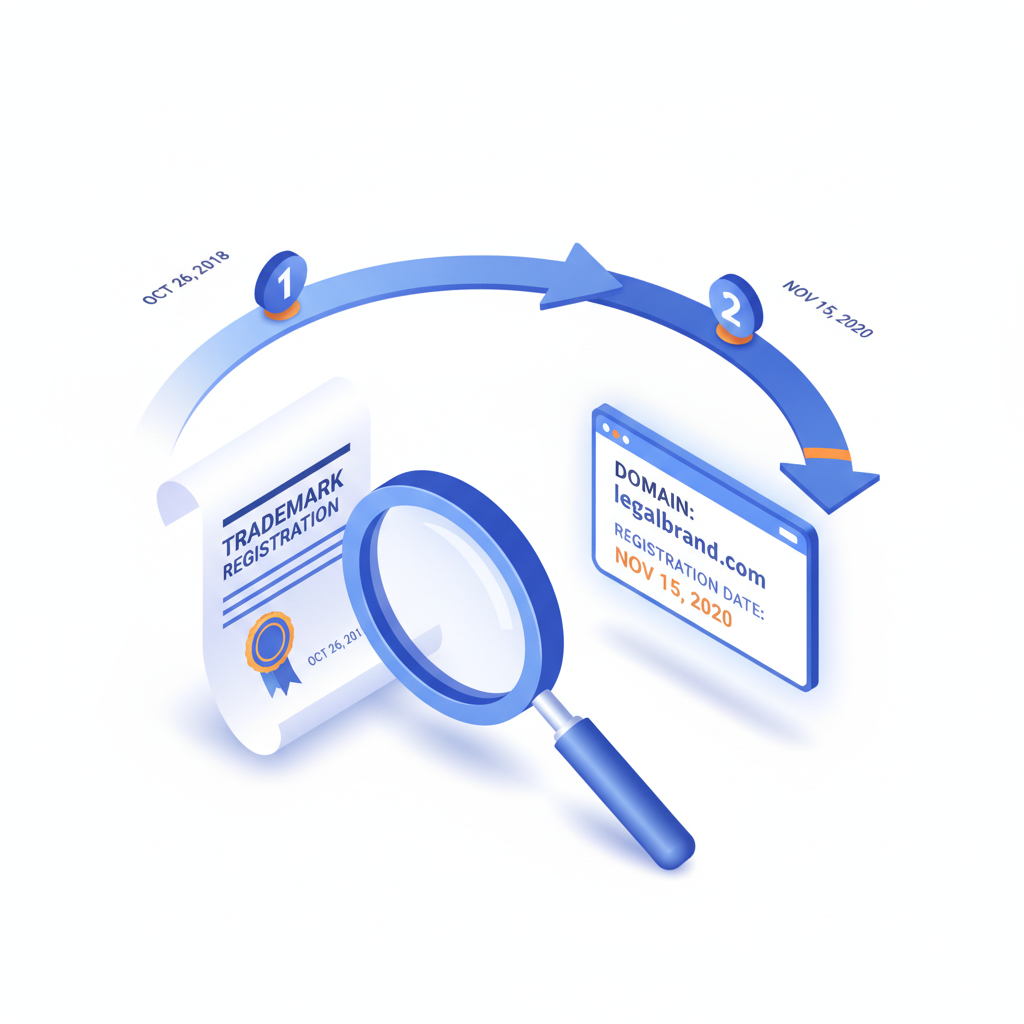
Before a panel even considers the respondent’s behavior, the complainant must pass the jurisdictional threshold of owning valid rights in a mark. This requires more than a simple assertion of ownership; you must provide evidence that your trademark was either registered or had established sufficient common law recognition at a time and in a territory that creates a conflict with the domain name.
The temporal relationship between your brand’s inception and the domain’s creation is the most frequent point of failure. If a domain was registered years before your trademark came into existence, proving that it was registered “in bad faith” to target you becomes nearly impossible, barring exceptional circumstances like the anticipation of a merger. Panels look for a specific alignment of dates to confirm standing.
| Scenario | Standing Status | Evidence Required |
|---|---|---|
| Registered mark predates domain | Strong Standing | Certificate of registration from a national/regional office. |
| Domain predates registered mark | Weak/No Standing | Proof of secondary meaning or common law rights predating the domain. |
| Pending trademark application | Insufficient | Status updates are not enough; rights must be vested or common law proven. |
| Common law (unregistered) rights | Conditional | Extensive proof of use, sales, and public recognition in relevant markets. |
When analyzing these rights, it is crucial to ensure that the chain of title is unbroken, especially if the mark was recently acquired from another entity. Discrepancies in ownership records can lead to administrative delays or even a total dismissal of the case. For detailed guidance on interpreting these rights, refer to the WIPO Overview 3.0. This jurisdictional foundation sets the stage for a comparative analysis of global rights and how they interact across different legal systems.
Comparative Analysis of Global Rights
When preparing a complaint, practitioners must reconcile divergent legal standards across jurisdictions. While the WIPO Overview 3.0 serves as a global touchstone for panel practice, the evidence required to demonstrate standing often hinges on whether the mark is registered or relies on common law protections.
This distinction is critical: in first-to-file civil law jurisdictions, a registration certificate is typically the baseline requirement. Conversely, in common law systems, complainants must substantiate “secondary meaning”—proving that the mark has acquired distinctiveness through extensive sales, market presence, or advertising. A frequent tactical error occurs when complainants provide insufficient evidence for unregistered marks or ignore that a domain registration might predate their rights in a specific territory. For instance, in cases like Telstra Corporation Limited v. Nuclear Marshmallows, the panel highlighted that the absence of a trademark registration does not necessarily defeat a claim, provided the complainant can rigorously document the mark’s reputation and consumer association.
| System Type | Primary Basis for Standing | Evidentiary Focus |
|---|---|---|
| Common Law | Registered or Unregistered | Secondary meaning via market usage data. |
| Civil Law | First-to-File Registration | Official registration certificates. |
| International | Madrid System/Designations | Territorial validity and active use. |
Alignment with these regional nuances is essential to avoid procedural dismissal. If your IP portfolio faces cross-border challenges, our Domain Name Disputes services provide the strategic analysis needed to ensure your filing meets the required burden of proof. Note: Outcomes remain subject to panel discretion; this overview is for educational purposes and does not constitute formal legal advice.
Securing Your Digital Assets Successfully
Securing digital assets through the Model range requires a move beyond surface-level assertions. Success hinges on a precise synthesis of evidence to meet the burden of proof required by WIPO Overview 3.0 standards, which emphasize that complainants must establish standing, a respondent’s lack of legitimate interest, and evidence of bad faith registration and use. Because panels rarely grant opportunities for supplemental filings, your initial submission must be comprehensive.
To mitigate the risk of administrative dismissal, consider these core focus areas:
- Documentation mapping: Ensure evidence explicitly connects to the required legal standards, whether relying on common law rights or registered trademark certificates.
- Chronological alignment: Clearly document that trademark rights predate the domain registration, as this remains a critical factor in panel decisions.
- Objective analysis: Focus on clear indicators of bad faith, such as passive holding or documented extortion attempts, rather than relying solely on assumptions about intent.
Given the complexity of these procedural hurdles, we invite you to consult our Domain Name Disputes service to ensure your complaint is strategically airtight.
Disclaimer: This content is for educational purposes and does not constitute legal advice. Domain dispute outcomes are fact-specific, contingent upon current panel practice and the nuances of the underlying trademark and domain evidence.
For help with this task, use the Domain Name Disputes service.
Frequently Asked Questions
What happens if a domain name was registered before I obtained my trademark?
In general, UDRP panels find it difficult to establish bad faith registration if the domain name was registered prior to the existence of your trademark rights. According to the WIPO Overview 3.0, the complainant must typically demonstrate that the respondent targeted a specific trademark that was already in existence at the time of registration.
However, there are exceptions: Retroactive bad faith may be argued in limited circumstances, such as if the domain owner acquired the domain with actual notice of your rights or engaged in a pattern of conduct that suggests the domain was held specifically to target the eventual trademark holder. If your trademark rights post-date the registration, you may need to pursue alternative legal avenues, such as local court litigation, rather than a UDRP proceeding.
Are there specific filing fees associated with a UDRP complaint?
Yes, filing a UDRP complaint involves mandatory administrative fees payable to the chosen dispute resolution provider (such as the WIPO Arbitration and Mediation Center or the Forum). These costs are distinct from any legal fees you might incur if you hire counsel.
- Fee Structure: Fees are typically calculated based on the number of domain names in dispute and whether you request a single-member or a three-member panel.
- Who Pays: The complainant is responsible for the initial filing fee. In some instances, if the respondent requests a three-member panel when a single-member was initially proposed, the costs may be split between the parties.
- Transparency: Providers publish their specific fee schedules on their websites, which should be reviewed carefully during your initial Domain Name Disputes strategy phase.
How long does the average UDRP process take from filing to decision?
The UDRP process is designed to be an expedited alternative to court litigation. Under the standard Rules for Uniform Domain Name Dispute Resolution Policy, the typical timeframe is approximately 60 to 90 days.
The timeline includes:
- Administrative Review: The provider checks for procedural compliance.
- Notification: The respondent is formally notified of the complaint.
- Response Period: The respondent has 20 calendar days to submit a formal response.
- Panel Appointment & Decision: Once the case file is complete, a panel is appointed and generally issues a decision within 14 days.
Delays can occur if there are administrative deficiencies in the filing or if the respondent requests extensions, highlighting the need for a technically precise complaint from the outset.
What is the difference between a single-member and a three-member panel?
When filing a complaint, you must choose the size of the administrative panel that will decide your case. This is a strategic decision based on the complexity and stakes of your dispute.
Single-Member Panel: This is the default and most cost-effective option. It is typically sufficient for clear-cut cases of cybersquatting where the evidence of bad faith and trademark infringement is straightforward.
Three-Member Panel: This option is often chosen for complex cases, disputes involving a large number of domain names, or matters where the legal arguments involve nuanced interpretations of policy. While it provides a more robust deliberation process, it also results in higher filing fees and potentially a slightly longer procedural timeline.
Can I use a UDRP decision to obtain monetary damages?
No, the UDRP is not a mechanism for recovering financial damages, legal fees, or lost profits. The primary and exclusive remedies available under a UDRP proceeding are limited to:
- Cancellation of the domain name registration.
- Transfer of the domain name registration to the complainant.
If your objective is to recover financial damages resulting from trademark infringement or business losses, you must seek relief through a national court of law or private settlement agreements. The UDRP is strictly limited to the recovery of the digital asset (the domain name) itself.
What if the respondent does not reply to my complaint?
If a respondent fails to submit a formal response, the UDRP process does not automatically result in a win for the complainant. While a default is often viewed favorably by the panel, you are still required to prove all three pillars of the UDRP policy (trademark rights, no legitimate interest, and bad faith registration and use).
The panel will assess the strength of your evidence independently, even in the absence of a defense. A poorly documented complaint can still be denied even if the respondent chooses not to participate. This is why ensuring your initial submission is legally robust is critical, regardless of whether the respondent is active or unresponsive.