UDRP Evidence Checklist: The Small Business Edge

Small businesses often navigate the complex David versus Goliath landscape of digital property with limited resources, making every piece of evidence count. This guide outlines a tactical domain name dispute verification path to ensure your submission is legally robust.
Verifying Your Trademark Rights

Establishing clear essential evidence for UDRP success requires a methodical approach to proving your proprietary rights. We will now examine how to document trademark ownership and assess geographic scope to build a foundational claim.
Documenting Trademark Certificates
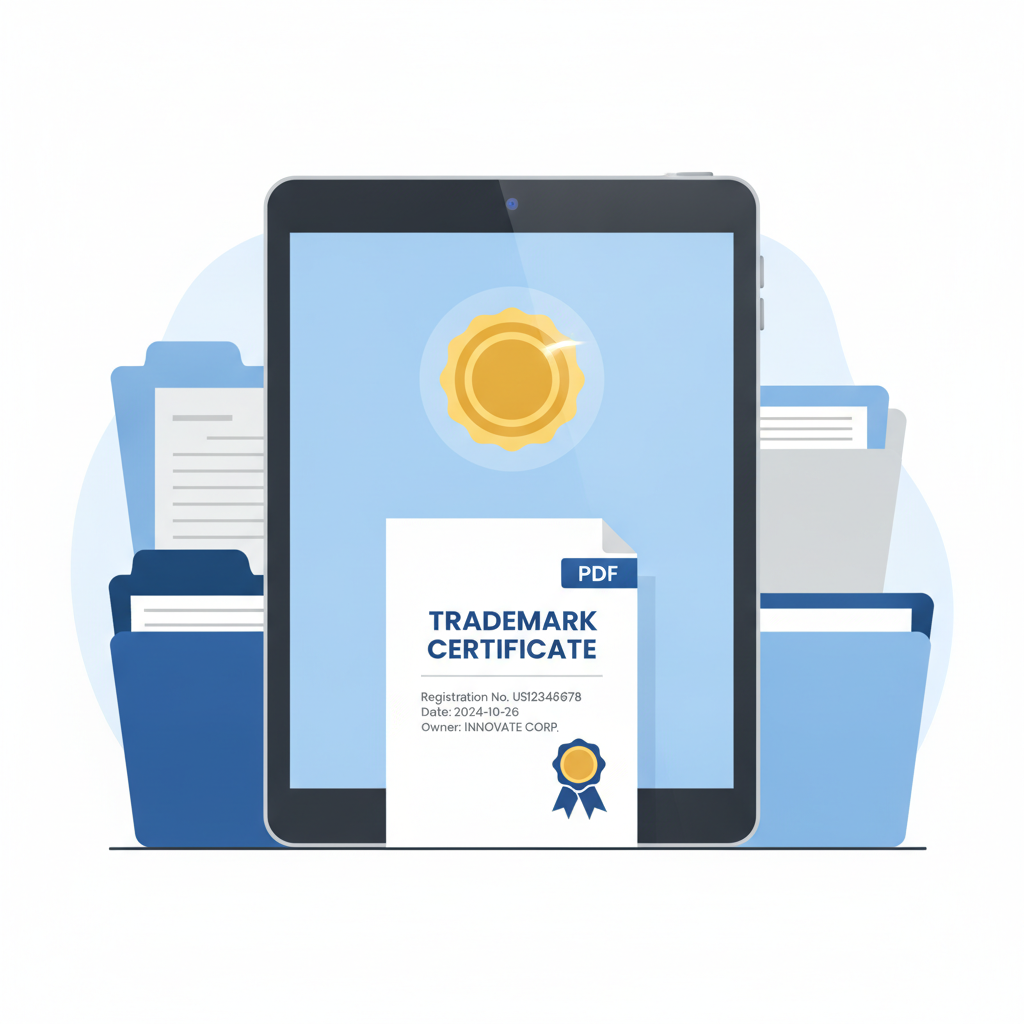
To satisfy the first element of a UDRP complaint, panels require verifiable documentation of trademark rights. Establishing a clear chain of ownership is essential; ensure your submission is structured to meet official evidentiary standards.
Required Evidence Checklist:
| Document Type | Requirement |
|---|---|
| Registered Marks | Official PDF certificates issued by national or regional trademark offices. |
| Status Verification | Extracts from authoritative databases (e.g., WIPO Global Brand Database) demonstrating current validity. |
| Pending Applications | Stamped filing receipts and proof of status reflecting active prosecution. |
Technical File Standards: Panels prioritize documents in PDF/A format. This format is critical because it preserves original metadata, such as embedded creation dates and digital signatures, which panels analyze to verify document authenticity and timeline accuracy.
Pro-Tip: Common Law Rights: Unregistered marks require significantly higher evidentiary weight. To substantiate common law rights, you must document “secondary meaning” through objective proof—such as specific sales volume reports, audited marketing expenditure, and evidence of substantial media coverage—rather than mere assertions of brand popularity.
Geographic Scope Assessment
While Documenting Trademark Certificates establishes your formal legal standing, your geographic scope serves as the critical anchor for proving that the respondent’s domain has infringed upon your specific market. ICANN policy alignment requires that a complainant demonstrates rights in the jurisdiction where they conduct business. Panels weigh evidence of market presence and trademark recognition differently depending on whether your brand operates locally or internationally; failing to map your rights correctly can weaken your position.
| Trademark Status | Evidence Weight in UDRP | Scope of Protection |
|---|---|---|
| National/Local Registration | High (Within registered territory) | Limited to domestic consumer base |
| International/Multi-Jurisdictional | High (Broad enforcement potential) | Extends to all registered markets |
| Common Law (Unregistered) | Medium (Requires high burden of proof) | Limited to areas of verified commercial activity |
For a small business, demonstrating that your mark has achieved distinctiveness in a specific region is often sufficient to overcome challenges. If the respondent is located in a different jurisdiction, you must bridge the evidentiary gap by showing that your trademark activities were known or accessible to consumers in that region. If you require assistance in aligning your trademark proof with jurisdictional requirements, our team at Claimon can provide the necessary legal guidance to ensure your strategy is robust.
Establishing the boundaries of your rights allows us to shift our focus toward the intent of the registrant, ensuring that we can effectively demonstrate the respondent’s lack of legitimate interest in the name.
Proving Bad Faith Registration
Establishing trademark rights is only the foundational step; under the UDRP, a successful dispute requires proving the registrant acted in bad faith at the time of registration or use. Panels look for specific patterns of abuse rather than general inconvenience. Indicators of bad faith include, but are not limited to, evidence that the domain was acquired primarily to sell it to the trademark owner for profit, or to intentionally disrupt a competitor’s business operations.
Advanced verification involves a deep-dive into the registrant’s digital footprint. Evidence such as historical WHOIS data, archives of the domain’s past content, and records of active correspondence can reveal a trajectory of cybersquatting. When preparing your strategy for domain name disputes, focus on gathering objective, verifiable data—such as DNS logs or dated screenshots from the Wayback Machine—that demonstrates the respondent’s intent to exploit your mark for commercial gain or reputational harm. Because panel decisions depend heavily on the specific nuances of respondent behavior, documenting a consistent pattern of conduct is often more persuasive than a single isolated incident.
The Bad Faith Evidence Checklist
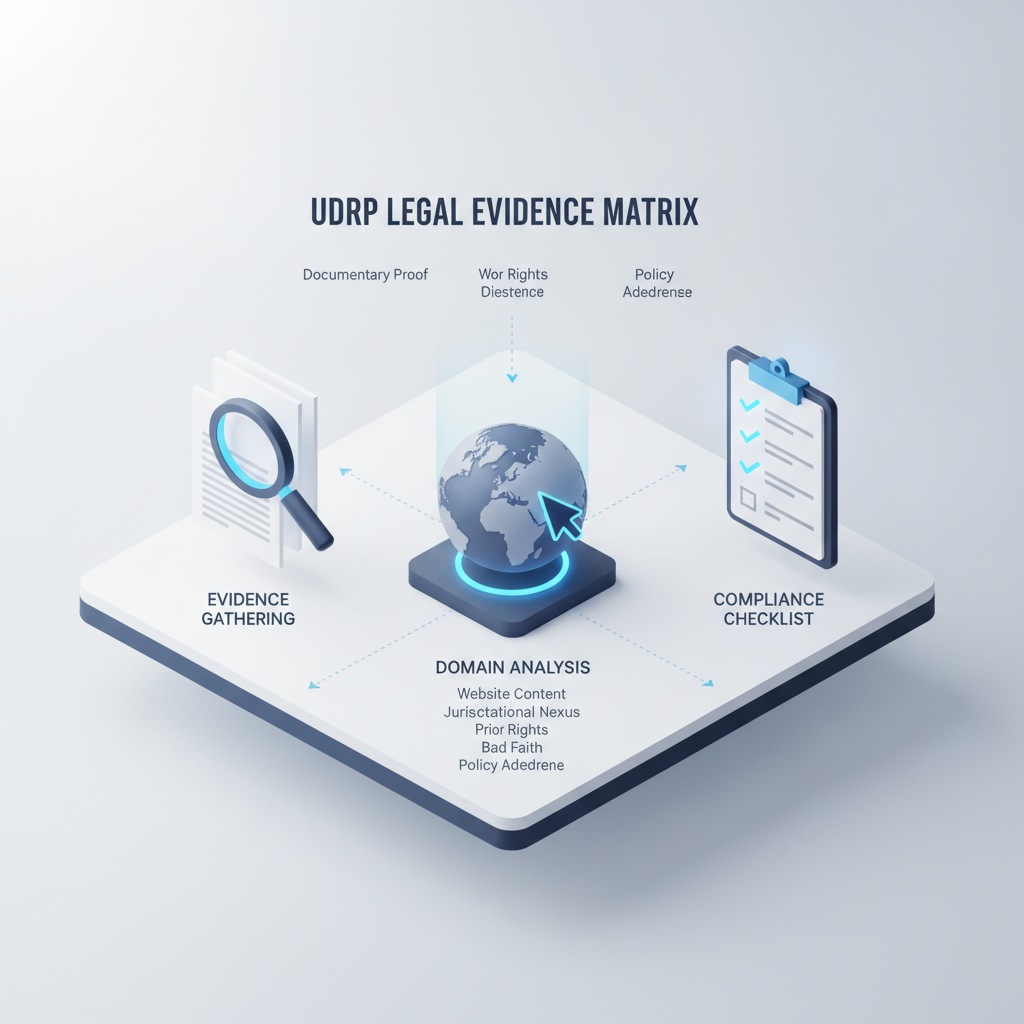
Proving bad faith requires building a cohesive evidentiary narrative. Under the Uniform Domain-Name Dispute-Resolution Policy (UDRP), panels evaluate specific conduct to determine if a domain was registered and used in bad faith. Small businesses often struggle to distinguish between circumstantial suspicion and the concrete “smoking gun” documentation required for success.
Evidence Matrix: Indicators of Bad Faith
| Category | Evidence Type | Strategic Value |
|---|---|---|
| Monetary Demands | Correspondence/Emails | Direct proof of intent to sell for profit exceeding out-of-pocket costs. |
| Patterned Conduct | WHOIS History/Records | Demonstrates a history of speculative registration (e.g., “typosquatting”). |
| Traffic Manipulation | Dated Screenshots | Captures diversion to competitor sites, proving misuse of brand goodwill. |
| Passive Holding | Archive Records (Wayback Machine) | Shows a domain kept inactive for years, specifically holding a brand name without legitimate use. |
Hypothetical: The Difference Between Allegation and Evidence
Failed Assertion: A business files a complaint alleging cybersquatting based on the domain being “taken.” Without logs, receipts, or communication, the panel treats this as a subjective grievance, leading to dismissal.
Successful Assertion: A business submits a curated dossier including an email thread where the respondent demands $5,000 for a domain, coupled with a WIPO-compliant timeline of trademark use prior to the registration date. This creates an objective, chronological link that panels use to verify bad faith intent.
Related topic reference: Technical audit.
Digital Footprint Analysis
Beyond the evidence parameters previously established, UDRP panels weigh a respondent’s historical digital footprint as a key indicator of intent. Captured snapshots of a domain’s past configuration reveal a history of ‘passive holding’ or the display of pay-per-click links unrelated to any legitimate business interest—behaviors often cited in WIPO panel decisions as evidence of bad faith registration.
Historical WHOIS records frequently expose suspicious patterns, such as multiple ownership shifts or the sudden acquisition of a domain immediately following a trademark registration. Forensic analysts at Claimon identify these temporal correlations to demonstrate that a registrant’s behavior is part of a broader, predatory pattern rather than an isolated, good-faith registration. Mapping these footprints against the timeline of your trademark rights provides the panel with concrete evidence of a coordinated effort to profit from established intellectual property, which is essential for substantiating a claim of bad faith under the UDRP.
Demonstrating Lack of Rights
Establishing the respondent’s lack of legitimate interests completes the core UDRP requirements for your case. We will now address the negative proofs framework and the critical role of independent expert legal review.
Negative Proofs Framework

Proving that a respondent lacks rights or legitimate interests involves a shift toward demonstrating a negative: essentially, that no bona fide activity exists. To avoid the common pitfall of over-submitting irrelevant materials, you should focus on proving that the domain holder has never been commonly known by the name in question and has made no demonstrable preparations for legitimate use. A targeted trademark clearance search is your strongest tool here; by searching official registries to show that your trademark predates their domain acquisition and that no related entities exist, you systematically strip away potential defenses of prior, good-faith use.
When performing this search, follow a structured path to ensure your submission remains lean and persuasive:
- Filter results by the respondent’s jurisdiction to identify any local prior art.
- Cross-reference the domain’s creation date against your first date of commercial use or trademark application to prove a clear chronological disparity.
- Document the absence of any licensing agreements or authorizations that would have permitted the respondent to use your IP assets.
By focusing only on these objective markers of absence, you avoid diluting your argument with conjecture, allowing the panel to clearly see that the respondent’s domain acquisition was purely opportunistic. This analytical rigor is vital to ensuring that your Essential Evidence for UDRP Success is not compromised by procedural oversights. Building on this solid foundation of objective proof, we move to identifying the importance of professional legal scrutiny to finalize your strategy.
Related topic reference: Essential evidence for udrp success.
Expert Legal Review Importance
While the Negative Proofs Framework provides the logical structure for your argument, self-representation often falters when navigating the granular nuances panels weigh in a “lack of rights” defense. A common pitfall is assuming that a simple trademark registration constitutes an automatic win; in practice, you must anticipate how a respondent will characterize their domain activity as fair use or non-commercial interest. Without a professional review of your evidentiary record, you risk leaving gaps that sophisticated respondents exploit to manufacture a veneer of credibility.
The primary risk in UDRP proceedings is not a lack of evidence, but an abundance of irrelevant data that obscures the core legal elements. Every evidentiary gap creates an opening for the respondent to reframe their registration as good faith, often turning a meritorious case into a costly procedural dismissal.
Achieving clarity in your submission requires moving beyond basic registration data. It involves identifying these subtle evidentiary gaps early. By refining your evidence package to be lean and fact-centered, you improve the coherence of your argument, ensuring the panel can easily trace the chronology between your trademark rights and the respondent’s domain acquisition. For a professional assessment of these specific nuances, you may consult Claimon’s legal expertise.
For help with this task, use the Domain Name Disputes service.
Your Next Step Toward Domain Recovery
A robust evidentiary strategy is the backbone of any successful domain recovery, transforming subjective claims into objective proof that panels cannot ignore. By leveraging a structured udrp evidence checklist for small business, you ensure that every link in your narrative—from trademark rights to the respondent’s bad faith—is documented with precision. You do not need to navigate these complex procedural requirements alone; our team at Claimon is prepared to audit your current evidence package to identify gaps before you submit your complaint to the provider. Taking this final step now solidifies your position and moves you closer to reclaiming your digital assets.
Frequently Asked Questions
How do WIPO panels handle evidence submitted in languages other than the language of the registration agreement?
When preparing your evidence for a domain name dispute, it is critical to verify the language of the domain’s registration agreement. If your evidence (such as emails, website screenshots, or cease-and-desist letters) is in a language different from the governing language of the domain, WIPO panels may require you to provide a translation.
Key considerations include:
- Procedural Rules: Most UDRP proceedings are conducted in the language of the registration agreement unless the parties agree otherwise or the panel decides based on the circumstances.
- Translation Costs: You should account for the time and potential expense of professional translation in your pre-filing budget, as relying on machine translations can lead to challenges regarding the accuracy and admissibility of your evidence.
- Certification: In some instances, a formal declaration or certification of the translation may be necessary to ensure the panel accepts the documentation as authentic.
What is the role of the ‘cease and desist’ letter in UDRP proceedings?
A cease-and-desist letter is often the first step in a domain dispute, but it serves a specific evidentiary purpose during UDRP proceedings. Rather than just being a demand for the domain, it acts as a tool to establish the timeline of bad faith.
When submitting correspondence as evidence, ensure you have:
- Proof of Delivery: Evidence that the respondent received the communication (e.g., read receipts or courier tracking).
- Respondent’s Reaction: The respondent’s reply—or their failure to reply—is often used by panels to assess bad faith. A refusal to engage or a demand for exorbitant fees to transfer the domain provides strong evidence for your case.
- Strategic Caution: Be aware that if your letter contains threats that are overly aggressive or legally inaccurate, it may be used by the respondent to argue that they are not acting in bad faith, but are instead being harassed. Consulting with experts on how to phrase these communications is highly recommended.
Does owning a trademark in one country grant me protection against cybersquatters globally?
Not necessarily. While UDRP is an international policy, your trademark rights are generally territorial. A trademark registered in the United States does not automatically grant you absolute rights in every jurisdiction where a cybersquatter might register a domain.
However, you can still succeed by demonstrating that:
- Your mark has acquired distinctiveness or secondary meaning, making it globally recognized despite local registration.
- The respondent targeted your specific brand, showing they were aware of your business and specifically intended to capitalize on your reputation.
- The domain is ‘confusingly similar’ to your mark, regardless of where the registration occurred.
Panels look for evidence of your market presence—such as international sales figures, website traffic logs from different regions, and global marketing efforts—to bridge the gap between local registration and global protection.
What constitutes ‘passive holding’ and how do I prove it?
Passive holding refers to a situation where a domain is registered but not actively used for a website, email, or other services. Proving bad faith in these cases is nuanced because the respondent may argue they have no intent to use the domain.
To build an evidence package for passive holding, you should gather:
- WHOIS history: To show the domain has been dormant for an extended period.
- Respondent’s pattern: Evidence that the respondent has registered other domains associated with other trademark owners.
- Lack of legitimate interest: Documentation showing the respondent has no connection to the name in the domain and has made no demonstrable preparations to use it.
The landmark case Telstra Corporation Limited v. Nuclear Marshmallows established that passive holding can indeed constitute bad faith if the circumstances point toward an intent to disrupt or profit from a third-party’s trademark.
Why is it important to use Wayback Machine (archive.org) snapshots as evidence?
Digital evidence is transient; websites can be altered or taken down instantly. The Internet Archive’s Wayback Machine provides a verifiable, third-party chronological record of what a domain looked like at a specific point in time.
This is vital for:
- Tracking Content Shifts: Showing that a domain was once used for a legitimate purpose and was suddenly repurposed to mirror your brand to deceive consumers.
- Evidence of Bad Faith: Demonstrating that a page displaying ‘for sale’ signs or competitive ads was published after you contacted the registrant, which helps prove the domain was held with predatory intent.
- Credibility: Panels prefer these objective, historical records over subjective descriptions of the website, as they remove the ‘he-said-she-said’ element of the dispute.