Winning UDRP Cases: The Evidentiary Standard
Securing a favorable outcome in domain name disputes is almost always determined by the quality of your initial filing rather than subsequent legal arguments. This guide outlines the essential evidence for udrp success, from verifying trademark rights to proving bad faith.
Proving trademark rights for UDRP
Establishing clear trademark rights is the threshold requirement for any domain name dispute. We will now examine the specific documentation needed for your case and how to avoid common evidentiary pitfalls.
Essential trademark documentation checklist

To satisfy the first prong of the UDRP, complainants must establish enforceable trademark rights. The burden of proof lies with the trademark owner to provide a robust evidentiary package, as outlined in the WIPO Guide to the UDRP. Professional Domain Name Disputes support can clarify whether your IP portfolio meets these evidentiary standards.
Trademark Documentation Checklist
- Registration Certificates: Provide official extracts from national or regional IP offices. Ensure these documents show the current status, jurisdiction, and active ownership.
- Proof of Use: Submit invoices, marketing materials, or screenshots showing the mark’s active use in trade. This is vital for verifying bona fide commercial presence.
- Geographic Scope: For unregistered marks, submit evidence of secondary meaning (e.g., media coverage or market penetration reports) within the relevant territory.
- Temporal Priority: Include records of the original filing or first-use date to demonstrate that your rights predate the respondent’s domain registration.
While registered marks provide a clear baseline, relying on common law (unregistered) rights requires a higher evidentiary burden. Panels in cases like WIPO Case No. D2000-0001 often look for evidence of deliberate, widespread consumer recognition rather than sporadic usage. Note that outcomes depend on specific facts, provider rules, and panel practice; this content is for informational purposes only.
Related topic reference: Verification methods.
Common pitfalls in rights assertion
While initial trademark documentation provides a procedural baseline, practitioners frequently witness cases collapse due to strategic errors during the assertion phase. One common pitfall is relying on trademarks consisting solely of generic or descriptive terms that lack secondary meaning. Proceeding against a domain name containing common industry language without demonstrating clear acquired distinctiveness can complicate your case; panels may find the complainant lacks the necessary rights or determine the action constitutes Reverse Domain Name Hijacking (RDNH), potentially harming future proceedings. For guidance on navigating these thresholds, consult the WIPO Overview of WIPO Panel Views on Selected UDRP Questions, which provides the authoritative framework for evaluating rights and bad faith.
Expert Insight: Domain policy specialist Anton Polikarpov warns that filing a UDRP complaint prematurely is not merely a procedural misstep—it is a strategic failure. Never equate possessing a trademark with holding an inherent, exclusive right to a domain name that consists of dictionary words or generic industry labels.
Complexity escalates when owners rely on narrow, local trademark filings to dispute global domains, failing to account for the territorial limitations inherent in the policy. A robust strategy requires an objective assessment of whether your evidence meets the established evidentiary thresholds required by panels. Before formalizing your complaint, rigorously evaluate the respondent’s potential for legitimate use, as their ability to demonstrate an independent right or interest remains a central defense that must be preemptively countered. Disclaimer: This content is informational and is not legal advice. Domain dispute outcomes depend on the specific facts of the case, current panel practice, and the interpretation of the Uniform Domain-Name Dispute-Resolution Policy.
Related topic reference: Technical audit.
Demonstrating no rights or legitimate interests
After confirming your legal standing, we must analyze whether the respondent has any legitimate claim to the domain. We will now examine indicators of illegitimate use and specific unauthorized affiliate behaviors.
Indicators of illegitimate domain use
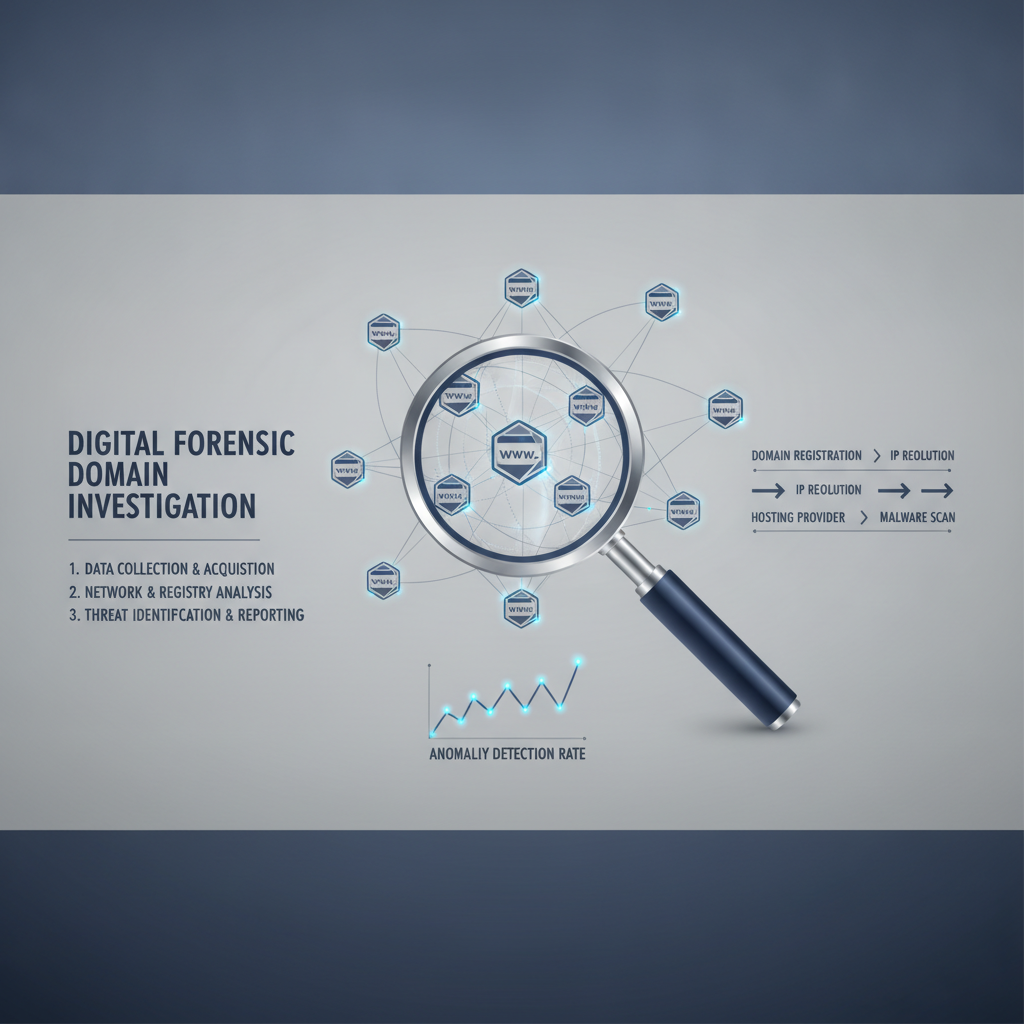
To succeed under the second prong of the UDRP, you must demonstrate that the respondent lacks any rights or legitimate interests in the domain name. This often involves a burden-shifting mechanism; once you make a prima facie showing that the respondent lacks rights, the onus shifts to them to provide evidence of their legitimacy. We look for specific patterns—such as the absence of a bona fide offering of goods or services, or the use of the domain solely for redirection to a competitor’s site—to establish this lack of interest.
| Pattern of Use | Classification |
|---|---|
| Use of the domain for a non-commercial, fair use intent | Potentially Legitimate |
| Operating a commercial site without authorization using a trademark | Illegitimate |
| ‘Parking’ the domain with pay-per-click links related to your mark | Illegitimate |
| Non-use or ‘passive holding’ for extended periods | Illegitimate |
Determining non-commercial fair use exceptions requires a sophisticated approach, as even a technically ‘active’ site may be deemed illegitimate if the content is purely deceptive. We will now look at how these patterns manifest in the context of unauthorized affiliate sites.
Case study: The unauthorized affiliate site
When indicators of illegitimate domain use emerge, building a coherent narrative is essential for a WIPO panel to identify a pattern of bad faith. Consider a common scenario: a registrant creates a site that mimics an authorized affiliate portal but primarily diverts traffic to a competitor or unauthorized commercial merchant. To build a persuasive case, you must document the domain’s evolution, typically capturing the transition from initial passive holding to the deployment of content featuring your trademark and deceptive commercial redirects.
Tracing the unauthorized affiliate funnel
Effective evidence management requires documenting this shift through high-fidelity snapshots at multiple intervals. This historical proof is vital to demonstrating that the domain was not used for legitimate, non-commercial purposes. By cross-referencing these captures with historical WHOIS data and passive DNS records, you can often illustrate that the respondent’s infrastructure is shared with other domains previously identified as malicious. Providing this context is part of our professional approach to Domain Name Disputes, helping to prove that the activity represents a systematic effort to capitalize on consumer confusion rather than an accidental oversight.
This evidentiary approach helps distinguish your claim from protected fair use, positioning the registrant’s actions as targeted commercial intrusion. By focusing on the respondent’s documented behavior, you align your strategy with the third prong of the UDRP, which requires proving that the domain was both registered and used in bad faith, as outlined in the official WIPO Domain Name Dispute Resolution Guide.
Related topic reference: Proving trademark rights.
Evidence of bad faith registration
With the respondent’s lack of legitimate interests established, the case shifts to proving malicious intent through documented bad faith. We will now examine the procedural roadmap for demonstrating such registrations and the importance of tracking respondent communication patterns.
The bad faith evidence roadmap

Proving bad faith requires a strategic approach to evidence gathering that moves beyond suspicion to document objective indicators of intent. Panels analyze the chronological relationship between domain acquisition and subsequent use to identify patterns such as unsolicited “offer to sell” communications, the deployment of malware, or the sudden activation of competing commercial sites. A key focus is demonstrating the respondent’s awareness—or constructive knowledge—of your trademark rights at the time of registration, a principle detailed in the WIPO Domain Name Dispute Resolution Guide.
Effective documentation involves verifying the site’s evolution over time. Evidence that a domain remained dormant before shifting to a commercial affiliate model often serves as a critical indicator of bad faith registration and use. Because the strength of your case relies on the quality and specificity of these proofs, we emphasize a systematic cataloging of the respondent’s digital footprint. As you refine your folder organization, prioritize capturing snapshots that contrast the site’s early status against its later, infringing activities, which provides the context necessary for panels to weigh your evidence against the criteria for illegitimate use.
Documenting respondent communication patterns
Beyond the evidence roadmap established for identifying bad faith registration, how a respondent interacts with you can be a pivotal turning point in a UDRP proceeding. Panels give significant weight to documented communication, as it often provides direct insight into the registrant’s intent through either explicit demands for payment or evasive, obfuscating replies.
Practitioner Insight: Always maintain a chronological, time-stamped log of all communications. Because digital evidence is susceptible to manipulation or accidental deletion, capture full-page screenshots immediately upon receipt. Ensure these captures include critical metadata—such as full email headers, sender IP addresses, and, for web-based contact forms, the complete sequence including confirmation timestamps. This prevents later claims of technical error or non-receipt.
Achieving essential evidence for UDRP success requires prioritizing non-repudiation. When a respondent initiates an unsolicited offer to sell the domain, archive the full thread in its native format (e.g., .eml or .msg files) rather than relying solely on screenshots. By treating these interactions as a primary pillar of your case, you move beyond abstract inferences to provide panels with objective proof of commercial motive. Effectively organizing these materials is a core component of professional Domain Name Disputes strategy, establishing a transparent, verifiable trail that supports your claims throughout the administrative review process.
Securing your digital assets effectively
Securing your digital assets requires transitioning from mere awareness to a rigorous, audit-ready evidentiary strategy. Meeting the high thresholds set by the ICANN Uniform Domain-Name Dispute-Resolution Policy (UDRP) demands that evidence—such as WHOIS history, metadata-rich correspondence, and comparative trademark usage—be organized into a cohesive, evidence-based narrative. Relying on disorganized or incomplete datasets often leads to procedural dismissals, as the burden of proof rests entirely on the complainant.
To ensure your file satisfies these strict requirements, we provide professional support through our Domain Name Disputes service, which focuses on stress-testing your evidence and managing the procedural complexities of your filing. Please note that dispute outcomes remain subject to the discretion of independent panelists, and all submissions are evaluated on their own merits without guaranteed results.
For help with this task, use the Domain Name Disputes service.
Frequently Asked Questions
Does the UDRP process allow for the recovery of legal fees or damages?
A critical distinction to understand is that the UDRP is a narrowly defined administrative proceeding, not a court of law. Consequently, the UDRP only provides for two specific remedies:
- Cancellation of the domain name.
- Transfer of the domain name to the complainant.
The UDRP does not provide for monetary damages, reimbursement of legal fees, or any other financial compensation for the time and effort spent on the dispute. If your situation involves significant financial losses, copyright infringement, or defamation that requires monetary compensation, you may need to pursue litigation in a national court of law alongside or instead of the UDRP process.
Why is the age of the domain registration relevant to my evidence gathering?
The timing of the domain registration in relation to your trademark rights is foundational. In UDRP cases, the panel examines whether the domain was registered and is being used in bad faith.
If a domain was registered before your trademark rights were established, succeeding in a UDRP claim becomes significantly more difficult. Exceptions exist, such as when a domain is acquired by a new party after your trademark rights were already well-known (a concept sometimes referred to as ‘retroactive bad faith’). When organizing your evidence folder, prioritize establishing a timeline that highlights the date of your trademark priority against the date of the domain creation, as this is one of the first metrics a panelist will evaluate.
Can I use social media activity as evidence of ‘bad faith’ usage?
Yes, social media activity can be highly persuasive evidence, especially if the respondent is using the domain to drive traffic to fraudulent social media profiles or if those profiles are used to impersonate your brand.
To ensure this evidence is admissible, avoid simply taking a quick screenshot. Follow these best practices:
- Use Time-Stamped Archives: Utilize services that capture the snapshot of the social media page along with the date and URL.
- Document Context: Explain how the social media activity is linked to the domain name (e.g., the domain directs to a profile that offers fake goods).
- Establish the Link: If the respondent is using the domain to trick users into visiting a site where they interact with social media, this clearly demonstrates a pattern of bad faith that fits within the UDRP criteria for ‘disrupting the business of a competitor’ or ‘attempting to attract, for commercial gain, Internet users.’
How should I structure my evidence for a panelist to read it most efficiently?
Panelists have a limited amount of time to review hundreds of pages of evidence. An disorganized submission is a missed opportunity. To improve the impact of your evidence, structure your appendix as follows:
- The Index of Annexes: Create a clear, numbered table of contents at the beginning of your exhibits.
- Reference by Number: Within your complaint, cite specific evidence by its Annex number (e.g., ‘See Annex 4 for evidence of the respondent’s offer to sell’).
- High-Contrast Exhibits: If you are highlighting text on a webpage, use a clean digital box or highlighter in your PDF. Do not rely on low-quality, grainy photos.
- Metadata Preservation: Wherever possible, preserve the file’s metadata, as panels increasingly appreciate the ability to verify the digital ‘fingerprint’ of an email or webpage capture.
For complex cases where the volume of evidence is high, consider seeking professional assistance with our Domain Name Disputes service to ensure your evidence is presented in a clear, narrative-driven, and compliant format.
How do WIPO panels handle evidence that is not in English?
When submitting evidence for a UDRP proceeding—particularly through the WIPO Arbitration and Mediation Center—all documents must generally be submitted in the language of the registration agreement, which is typically English. If your evidence (such as a cease-and-desist response from a respondent or an archived webpage) is in a different language, it is not sufficient to simply submit the original file.
You must provide:
- Professional Translations: Accurate, certified translations of the non-English materials.
- Bilingual Documentation: The preferred practice is to submit the original document alongside the translation to ensure the panel can verify the content’s integrity.
Failure to provide a translation can lead the panel to disregard the evidence entirely, which may weaken your position regarding the respondent’s bad faith or lack of legitimate interest.
What happens if a domain name is transferred to a new registrant while the UDRP case is pending?
According to the ICANN Uniform Domain-Name Dispute-Resolution Policy (UDRP), once a dispute is initiated, the registrar is notified to lock the domain. This prevents any further transfers or updates to the domain’s ownership records until the dispute is resolved.
However, if a transfer occurs immediately prior to the filing, you may need to update your complaint to include the new registrant. It is critical to perform a final check of the current WHOIS records immediately before submitting your case to ensure the respondent listed in your complaint matches the current, verified registrant. If you discover a transfer has occurred during the proceedings, notify the provider immediately; they will provide guidance on whether a formal amendment to the complaint is necessary.