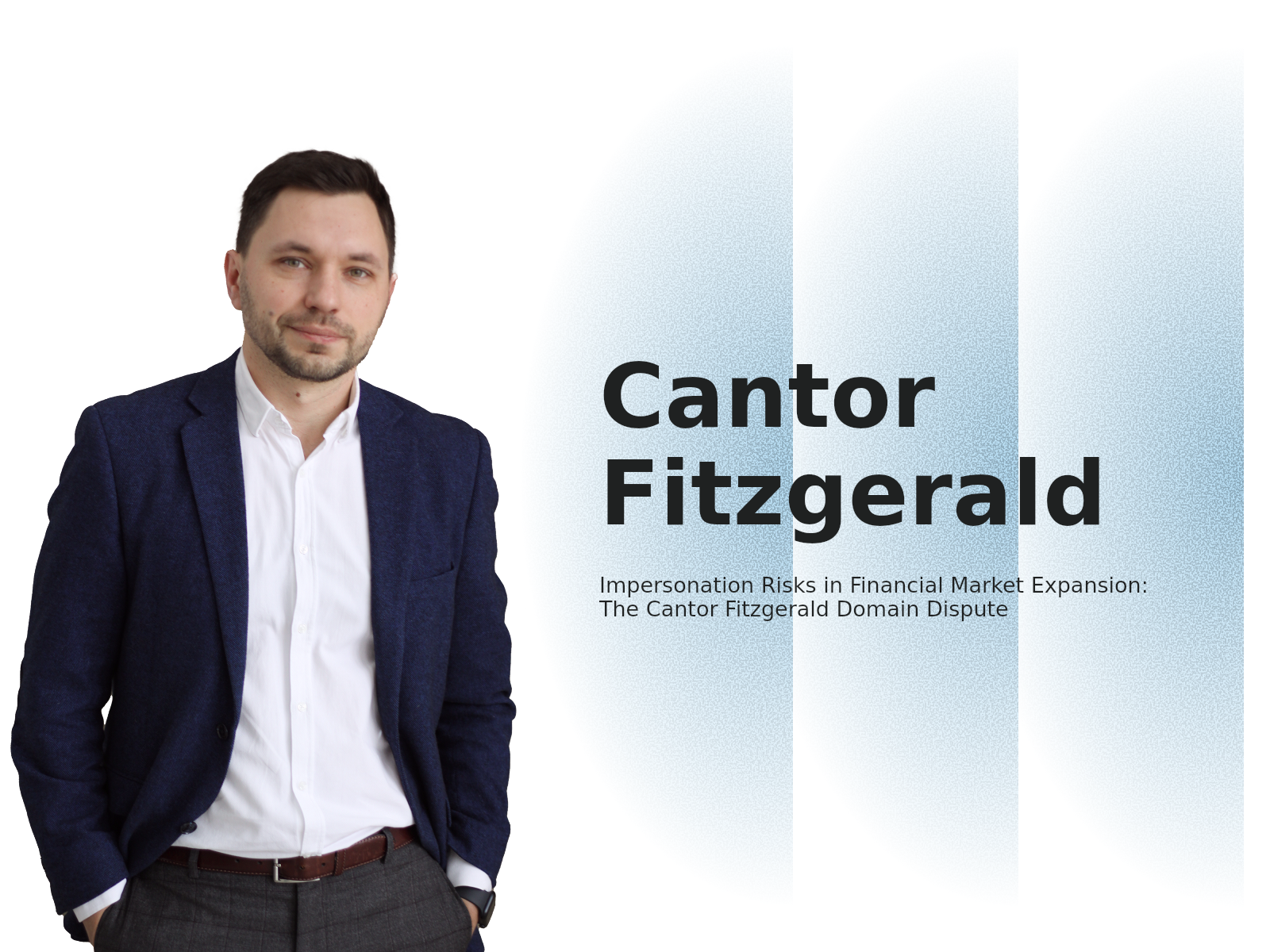
In WIPO case D2025-4515, Cantor Fitzgerald Securities successfully argued for the transfer of the domain cantorfitzgeraldequitypartners.com from respondent Emeka Charles Orji. The disputed domain was registered to target the financial firm’s trademark and redirected to a page offering the domain for resale. Sole panelist Edoardo Fano ordered the domain transferred due to bad faith targeting and the clear risk of implied corporate affiliation.
Case Snapshot
| Case Number | D2025-4515 |
|---|---|
| Complainant | Cantor Fitzgerald Securities |
| Respondent | EMEKA CHARLES ORJI |
| Disputed Domain | cantorfitzgeraldequitypartners.com |
| Threat Tactic | Corporate Impersonation |
| Decision Date | 2026-01-13 |
| Panelist | Edoardo Fano |
| Outcome | Transfer |
| Official Source | https://www.wipo.int/amc/en/domains/search/text.jsp?case=D2025-4515 |
Facing Unauthorized Domain Registrations or Brand Abuse?
Our domain dispute attorneys represent trademark owners and businesses worldwide before WIPO, Forum (NAF), and CAC. Explore our Domain Name Disputes and Enforcement & Takedowns services, or request a free case evaluation.
Request Case EvaluationCommercial Impersonation and Expansion Risks in Institutional Finance
The registration of target-specific, brand-plus-keyword domains like cantorfitzgeraldequitypartners.com poses a critical commercial threat by imitating legitimate business structures. By combining a highly recognized financial trademark with industry-specific operational descriptors like ‘equity partners’, bad-faith actors create an immediate risk of implied affiliation. WIPO jurisprudence, specifically under section 2.5.1 of the WIPO Overview 3.0, establishes that such compositions effectively suggest sponsorship or endorsement by the trademark owner. For institutional investors and financial sector clients, this deceptive alignment can severely disrupt official communications, compromise brand exclusivity, and dilute legitimate marketing channels.
Furthermore, the monetization of these targeted domains via unregulated third-party resale channels introduces severe reputational and strategic risks during market expansions or corporate developments. When a domain mimicking a potential business division is held for profit, it preemptively blocks the brand owner from securing logical digital pathways for new ventures or specialized funds. Even in the absence of active phishing campaigns or documented client losses, the unauthorized holding and public offering of such brand-associated domains forces financial institutions to contend with commercial exploitation, potentially delaying regional market entries or forcing defensive legal actions to reclaim critical intellectual property.
Legal Analysis: Confusing Similarity, Implied Affiliation, and Bad Faith Exploitation in Financial Domain Disputes
Under the first element of the UDRP, Panelist Edoardo Fano’s analysis focused on the visual and textual composition of the disputed domain name cantorfitzgeraldequitypartners.com. The panel concluded that the domain is confusingly similar to the Complainant’s marks because it wholly incorporates the registered CANTOR and CANTOR FITZGERALD trademarks, which have been registered since 2003. Legally, the addition of the descriptive term ‘equity partners’ to the Complainant’s core brand does not eliminate confusing similarity, as the underlying trademarks remain entirely recognizable. This positioning is particularly critical for financial entities that maintain distinct online footprints, such as the Complainant’s official operations at cantor.com and cantorfitzgerald.com.
Regarding the second element of the Policy, the panel determined that the Respondent, Emeka Charles Orji, possesses no rights or legitimate interests in the disputed domain name. The Complainant has never authorized the Respondent to use its trademarks, and the Respondent is not commonly known by the disputed name. From a business risk perspective, the panel emphasized that the specific composition of cantorfitzgeraldequitypartners.com carries an inherent risk of implied affiliation. By pairing a prominent financial trademark with a highly relevant industry term like ‘equity partners,’ the domain effectively suggests sponsorship, endorsement, or corporate affiliation, posing a direct threat to authentic marketing channels and investor communications.
The evaluation of bad faith registration and use under the third element centered on the commercial exploitation of the Complainant’s brand. Registered on September 16, 2024, through Porkbun LLC, the disputed domain name redirected to a page offering it for sale for profit, demonstrating an intent to capitalize on the reputation of the Complainant’s marks in the financial sector. While the Respondent sent two informal email communications to the WIPO Center, he failed to submit a formal response. This failure to provide a credible explanation, combined with targeting well-known trademarks to demand a premium resale price, confirmed that the domain was registered and used in bad faith for illicit commercial gain.
Analyzing the Evidentiary and Procedural Strengths of the Complainant’s Case
Cantor Fitzgerald Securities structured a persuasive case by aligning their established 2003 trademark registrations for CANTOR and CANTOR FITZGERALD against a highly targeted brand-plus-keyword registration. By documenting their official online presence at cantor.com and cantorfitgerald.com, the Complainant demonstrated strong commercial goodwill pre-dating the September 16, 2024 registration of cantorfitzgeraldequitypartners.com. The strategic positioning successfully showed that the addition of ‘equity partners’—a descriptive sector term—did not diminish confusing similarity but instead exacerbated it, creating a severe risk of implied corporate affiliation that could mislead market participants.
A key element in the Complainant’s success was the submission of clear evidence showing that the disputed domain redirected to a website offering it for sale for profit. This commercial exploitation of the Complainant’s financial sector reputation established both bad faith registration and use under the UDRP framework. Because the Respondent, Emeka Charles Orji, submitted only informal email communications instead of a formal response, the Complainant’s documented evidence of unauthorized trademark use and lack of legitimate interests remained entirely unrebutted, enabling panelist Edoardo Fano to order a swift transfer.
Practical Recommendations
- Establish proactive domain monitoring alerts that target core brand terms combined with high-risk financial industry qualifiers (such as ‘equity partners’, ‘capital’, or ‘securities’) to intercept corporate impersonation attempts before they can be used to mislead clients.
- Document and preserve time-stamped evidence of any domain redirection behavior immediately upon discovery, particularly ‘for-sale’ landing pages or public resale listings, to establish a clear case of bad-faith commercial exploitation under the UDRP.
- Align corporate IP strategy with business development by defensively registering domain variations featuring key descriptive terms before announcing new corporate initiatives, joint ventures, or regional financial divisions.
- Monitor and analyze any informal communications sent by respondents to the dispute provider during UDRP proceedings, as these non-compliant responses often contain implicit admissions of commercial intent or trademark targeting that can support the complainant’s case.
Frequently Asked Questions (FAQ)
Why was the domain ‘cantorfitzgeraldequitypartners.com’ considered confusingly similar to the complainant’s brand?
The WIPO panel determined that the domain name is confusingly similar because it wholly incorporates Cantor Fitzgerald’s registered ‘CANTOR’ and ‘CANTOR FITZGERALD’ trademarks, creating a high risk that the public would incorrectly perceive it as an official corporate division.
What evidence established that the respondent lacked legitimate rights to the domain?
The panel found that the respondent, Emeka Charles Orji, had no authorization to use the Cantor Fitzgerald trademarks, was not commonly known by the name, and was not engaged in a legitimate non-commercial or fair use of the domain name.
How did the panel conclude that the domain was registered and used in bad faith?
Bad faith was proven by the respondent’s attempt to capitalize on the renown of the Cantor Fitzgerald brand in the financial sector by using the domain to host a page offering the asset for sale for profit, a classic indicator of cybersquatting.
What does this case illustrate regarding the tactic of brand-plus-keyword registration?
This case demonstrates how bad actors combine a recognized brand name with professional-sounding terms like ‘equity partners’ to create an ‘implied affiliation’ risk, which could potentially deceive institutional investors or disrupt a company’s legitimate market expansion efforts.
Facing corporate impersonation through a domain?
This case highlights how bad-faith actors use brand-plus-keyword domains to simulate implied affiliation and corporate endorsement. Don’t let your brand’s reputation be exploited for resale or market deception. Contact our experts to assess your UDRP eligibility and secure your digital assets.
This case note is for informational purposes only and is not legal advice.