Building an unshakeable evidence file for UDRP
Even the most compelling legal theory collapses without a solid evidentiary foundation. This guide details the technical and strategic steps for building a robust file, expanding on the legal principles of proving bad faith.
Core categories of evidence in domain disputes
Professional domain dispute management requires a systematic approach to documentation. We will first examine trademark priority before moving to the specific indicators of bad faith registration and use.
Trademark documentation and priority rights

To establish standing in a UDRP proceeding, a complainant must demonstrate rights in a trademark that is identical or confusingly similar to the disputed domain. According to the WIPO Overview 3.0, while a registered mark provides a prima facie case for the first element of the policy, the evidentiary burden increases if the trademark is descriptive or was registered after the domain name. This initial step of documenting rights is vital before moving to the bad faith analysis phase.
| Core Categories of Evidence | Specific Documentation | Legal Purpose |
|---|---|---|
| Statutory Rights | Trademark certificates from USPTO, EUIPO, or the WIPO Global Brand Database. | Proves official recognition and establishes priority dates against the domain registration. |
| Common Law Rights | Dated invoices, historical website archives (Wayback Machine), and audited sales data. | Establishes rights in jurisdictions where registration isn’t mandatory or for unregistered marks. |
| Secondary Meaning | Advertising expenditures, consumer surveys, and unsolicited media mentions. | Required for descriptive terms to show consumers associate the name with a specific source. |
Establishing “secondary meaning” is critical when a mark lacks global fame or consists of common terms. In our experience handling Domain Name Disputes, we have seen panels reject claims where the complainant relied solely on a recent registration to challenge an older domain. For example, our client successfully overcame a “generic term” defense by providing notarized statements from industry partners and records of a decade of continuous use in a niche manufacturing sector, demonstrating that the term had acquired distinctiveness long before the respondent registered the domain.
Documenting geographical reach also prevents the “good faith registration of a dictionary term” defense. Evidence should confirm that the trademark was known in the region where the respondent is located or that the respondent specifically targeted the complainant’s market through localized content or traffic diversion patterns.
Evidence of the Respondent’s bad faith
Establishing trademark priority is only the first step; the case often hinges on demonstrating that the domain was both registered and used in bad faith. During this process, we look for behaviors that suggest the respondent intended to profit from your reputation rather than build a legitimate business. This often manifests through pay-per-click (PPC) landing pages where the registrar or registrant earns revenue from ads related to your industry, or through explicit attempts to sell the domain to the trademark owner.
Panels look for a pattern of conduct that satisfies the specific legal criteria used in UDRP proceedings. One of the most damning pieces of evidence is a direct offer to sell the domain for an amount far exceeding the respondent’s documented out-of-pocket registration costs. To document this effectively, any communication from the respondent or their broker—even if marked “without prejudice”—should be preserved, as panels frequently admit such correspondence to prove the intent of the offer. The following table illustrates how panels contrast legitimate costs with bad faith indicators:
| Activity Type | Evidence of Good Faith | Indicator of Bad Faith |
|---|---|---|
| Sale Offers | Price reflects actual development costs or fair market value for generic terms. | Price is an arbitrary, five-figure sum targeted at the trademark owner. |
| Monetization | Links are non-commercial or unrelated to any known brand. | PPC links generate revenue based on the trademark’s specific industry keywords. |
| Domain Portfolio | A handful of domains related to a specific personal hobby. | A large portfolio targeting famous third-party brands and common typos. |
Passive holding—where the domain points to a blank page or a “coming soon” notice—does not provide a safe harbor for the respondent. Under the established Telstra doctrine, if the complainant’s brand is highly distinctive and the respondent has no plausible good-faith use, the mere act of holding the domain without activity can be ruled as bad faith use. Successfully proving this requires showing that it is impossible to conceive of any legal use the respondent could make of the domain that would not infringe upon your rights. Once the core indicators of bad faith are identified, the focus must shift to securing this data before it is altered or hidden.
Related topic reference: How to prove bad faith in udrp case.
Preserving volatile digital evidence effectively
Securing digital records requires technical methods that withstand the scrutiny of a UDRP panel. We analyze how to capture website content and WHOIS records before the respondent attempts to hide their tracks.
Using third-party archival tools
Standard manual screenshots are frequently insufficient for professional filings because they lack independent verification and objective timestamps. To build a robust case, we prioritize third-party archival tools like the Wayback Machine and Archive.today, which provide publicly verifiable records often cited as a gold standard in WIPO case law. These tools are essential when a respondent attempts to “scrub” infringing content; however, while they serve as primary evidentiary anchors, they are most effective when integrated into a multi-faceted strategy to avoid the common pitfall of relying exclusively on a single archival source.
The Internet Archive’s Wayback Machine is the primary gold standard in domain disputes. WIPO panels routinely accept Wayback Machine snapshots as reliable evidence of historical use, especially when proving that a domain was parked with infringing links at the time of registration. If the Wayback Machine hasn’t crawled the site recently, tools like Archive.today allow you to trigger a manual snapshot that generates a unique, unalterable URL with a cryptographic timestamp. This creates an objective trail that the respondent cannot claim was “photoshopped” or manipulated by the complainant.
The credibility of your evidence is directly tied to its source. A snapshot from an independent archive carries more weight than a local PDF export because it proves the content was visible to the public at a specific point in time, regardless of what the respondent claims later.
Using these archives allows us to document the transition from a parked page to a defensive “under construction” page, which panels often interpret as an admission of guilt or an attempt to evade the policy. By layering these archival records with technical data, we ensure that even if the website is taken down, the proof of its former state remains accessible to the panel. Beyond general archives, the recovery of historical data often requires more granular forensic snapshots of the technical infrastructure.
Forensic snapshots of parked pages

While archival tools capture the visual evolution of a site, they often fail to render the dynamic scripts driving monetization. To build a compelling case, one must document the technical path of the commercial traffic generated by a domain parking page. This involves creating forensic snapshots that record not only the displayed Pay-Per-Click (PPC) links but also the specific destination URLs to which users are redirected to demonstrate commercial gain.
Documenting these transitions is vital for establishing the “commercial gain” element required by most dispute policies. When a domain squatter populates a page with links related to your specific industry or competitors, they are actively profiting from your brand’s reputation. A high-quality snapshot should include the following data points to ensure the integrity of your evidence:
- Hyperlink mapping: Documenting the raw URL of every sponsored link on the parked page.
- Redirection chains: Capturing the series of intermediate URLs used by the parking service to track clicks before reaching the final landing page.
- Competitor targeting: Identifying when the destination site belongs to a direct market rival, which directly supports a finding of bad faith.
- Metadata and timestamps: Recording the server headers and local time to verify that the monetization was active at the moment of documentation.
Capturing these dynamic elements prevents a respondent from claiming the parking page was a “default setting” of their registrar with no intentional commercial intent. By proving that the traffic was steered toward relevant commercial targets, you transform a generic screenshot into a forensic record of bad faith exploitation. This technical documentation provides the bridge necessary to move from analyzing the website’s content to investigating the individual or entity responsible for its operation.
Unmasking the respondent through WHOIS history
Transitioning from website content to the owner’s identity is crucial for establishing intent. This phase focuses on uncovering the registrant’s details and history to pierce any layers of anonymity and privacy shields.
Leveraging reverse WHOIS lookups
Identifying the registrant is only the first step; the real strategic value lies in determining whether the respondent is a serial squatter. Reverse WHOIS lookups allow us to use a single piece of known data—such as an email address, a phone number, or a physical location—to query databases like DomainTools or Iris. This process uncovers other domain names owned by the same individual, which is often the most effective way to prove a “pattern of conduct” under the UDRP.
A respondent may attempt to argue that their registration of your brand name was a singular, innocent mistake. However, this defense collapses if a reverse lookup reveals they have a portfolio of dozens of domains targeting various trademarks. Panels are significantly more likely to rule in your favor when you can demonstrate that the respondent regularly engages in these activities. Consider a scenario where a registrant holds one domain that appears “clean,” yet your investigation links them to fifty other infringements; this context changes the legal perception of their intent from accidental to predatory.
By correlating these registration records, it is possible to move beyond the specific dispute to demonstrate the respondent’s broader pattern of conduct. This data-driven approach ensures that the evidence file provides a comprehensive history of the respondent’s domain portfolio. Once these connections are established, the focus shifts to addressing the methods used to limit access to registrant information, such as privacy proxies and masked data.
Managing privacy proxy challenges
While reverse WHOIS lookups provide identifying data regarding a respondent’s domain portfolio, the process is often limited by privacy proxies or GDPR-redacted records. Addressing these challenges requires transitioning from public observation to formal disclosure requests. Registrars generally decline to disclose registrant data upon informal request citing privacy obligations; however, the UDRP process provides a mechanism for data retrieval. Once a complaint is filed, the registrar is mandated to lock the domain and disclose the underlying registrant data to both the provider and the complainant. Utilizing domain name dispute services ensures that the actual identity of the registrant is correctly identified for the legal proceedings.
Strategically gathering relevant documentation involves comparing the current redacted state of a domain with its historical ownership data to prove that the privacy shield was adopted specifically to frustrate the trademark owner. This comparison allows us to argue that the respondent is not merely an anonymous user, but a calculated actor attempting to evade legal service or mask a pattern of abusive registrations. When the revealed data matches previous infringing records found in your investigation, the respondent’s defense of “good faith registration” typically collapses.
| Data Category | Privacy Shield / Redacted Data | Historic WHOIS Records |
|---|---|---|
| Visible Owner | Listed as “Privacy Service” or “Redacted for Privacy” | Identifies the actual individual or corporate entity |
| Contact Details | Generic proxy emails (e.g., @proxy.com) | Direct administrative and technical contact points |
| Utility in UDRP | Limited; obscures the respondent’s identity | Crucial for establishing a “pattern of conduct” |
By effectively piercing these privacy layers, we transform an anonymous threat into a tangible respondent with a documented history, setting the stage for a detailed analysis of how this data translates into a successful panel decision in the upcoming Case study: The impact of evidence quality.
Case study: The impact of evidence quality
High-quality digital forensics determines the final ruling in a domain dispute. We examine how specific evidentiary standards influence a panel’s decision through the lens of contrasting litigation strategies and real-world outcomes.
Weak vs strong evidence filings
In the framework of a Case study: The impact of evidence quality, the most frequent reason for a failed UDRP complaint is the reliance on “conclusory allegations.” Many trademark owners lose cases because they simply state that a domain was registered in bad faith without providing the underlying data to prove it. Panelists are not investigators; they are adjudicators who decide based solely on the file presented. A successful recovery depends on the ability to move beyond “knowing” the respondent is a squatter and providing the technical proof that confirms it.
We recently represented a client where the difference between conclusory allegations and a data-backed filing was stark. In a previous attempt managed by a different firm, the panel rejected the complaint because it lacked specific proof of targeting. When our team took over, we documented the redirection chains that led directly to a competitor’s site and captured server timestamps proving active monetization. This transformation from a vague assertion to a forensic narrative shifted the panel’s perspective from skepticism to a finding of clear bad faith. The table below highlights the critical distinctions that separate a win from a loss.
| Element | Weak Filing (Likely Failure) | Strong Filing (Likely Success) |
|---|---|---|
| Bad Faith Proof | Simple statement: “The respondent is a squatter.” | Correspondence logs showing an unsolicited five-figure sale offer. |
| Website Content | General screenshots of the homepage. | Forensic snapshots with hyperlink mapping and redirection chains. |
| Respondent History | No mention of other domains. | Portfolio analysis showing dozens of similar trademark infringements. |
Proving intent requires more than just showing the domain is parked; it involves documenting the specific actions the respondent took—or failed to take—once they were aware of your rights, which is often best captured through Strategic communication as evidence.
Strategic communication as evidence
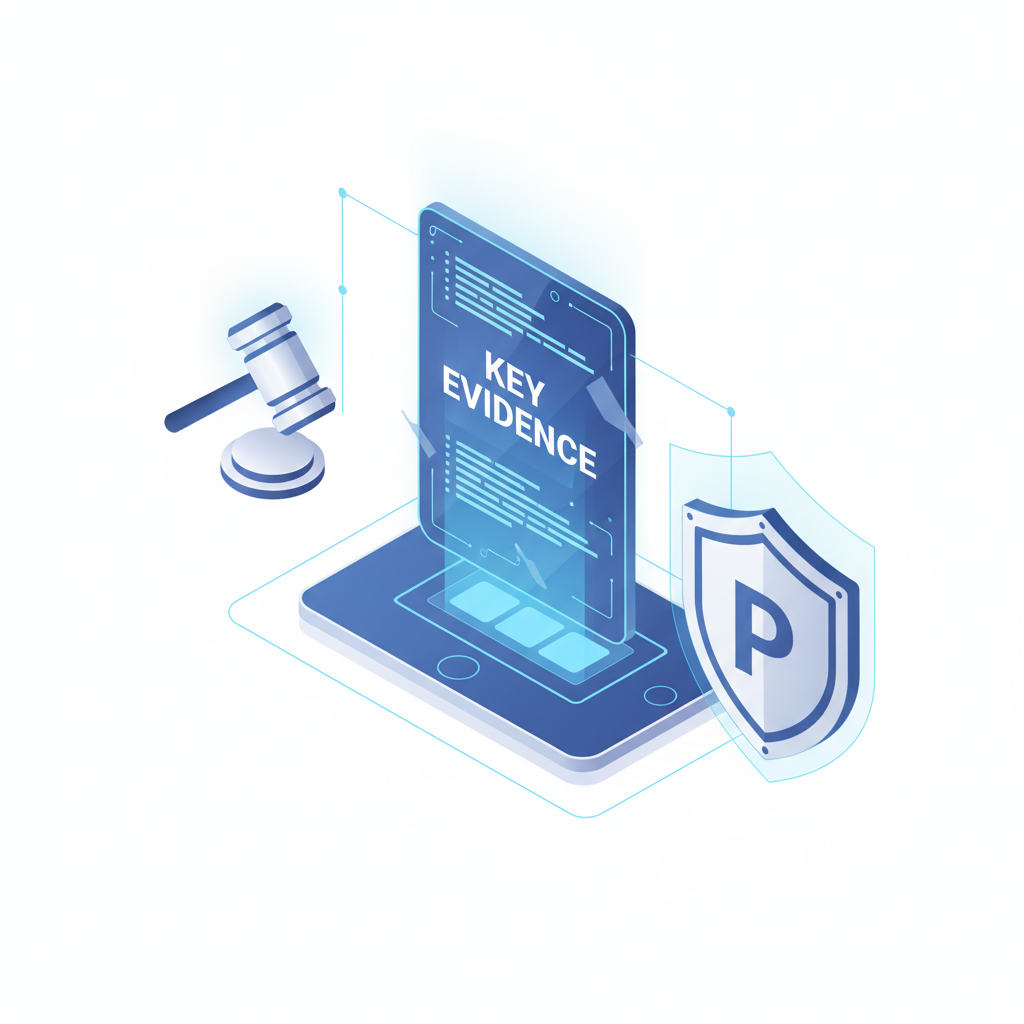
Direct communication often yields the strongest proof. We examine how response letters assist in collecting evidence for a cybersquatting claim while avoiding the procedural trap of reverse hijacking.
Expert Insight: Over-negotiating via email can inadvertently signal a lack of urgency or validate a squatter’s rights; keep pre-filing correspondence strictly focused on asserting your established legal priority.
Cease and Desist responses as proof
In the pre-litigation phase, a cease and desist (C&D) letter serves as a diagnostic tool to elicit actionable evidence. When a respondent replies with an offer to sell the domain for a sum exceeding their out-of-pocket costs, they provide direct proof of “valuable consideration.” According to the WIPO Overview 3.0, Section 3.1.1, such offers are primary indicators of bad faith registration and use. By documenting these threads, rights holders can gather proof of intent and pivot from circumstantial claims to concrete admissions of commercial extortion.
Beyond price points, the nature of the response is critical for gathering proof of intent for domain disputes. A common tactical victory occurs when a respondent admits awareness of the brand but claims the registration was “aspirational” or for a “future project” that lacks any verifiable preparation. In cases involving Domain Name Disputes, Anton Polikarpov, an Intellectual Property attorney and UDRP expert, often sees respondents attempt to mask bad faith by offering to “lease” the domain or asking the trademark owner to “name their price,” both of which UDRP panels frequently interpret as evidence of targeting.
Checklist: Diagnostic C&D Response Markers
- The “Make an Offer” Trap: Even if the respondent doesn’t name a price, forcing the complainant to bid first is often viewed as a sophisticated attempt to hide extortionate intent.
- Opportunistic Timing: Admissions that the domain was registered immediately following a product launch, IPO filing, or trademark publication.
- Conditional Refusal: Statements like “I won’t sell unless you drop your legal claims,” which can demonstrate a lack of bona fide rights or interests.
- PPC Admission: Admitting the domain generates revenue through ads while claiming the use is “non-commercial” or “personal.”
A specific example involves a respondent who claimed to have registered a domain for a “family travel blog” but, upon receiving a C&D, immediately pivoted to offering a “brokerage deal” for $5,000. This inconsistency, preserved in an email chain, serves as a self-executing proof of bad faith that negates any defense of legitimate interest. This strategic record-keeping transforms a simple exchange into a narrative of awareness that panels find difficult to ignore.
Disclaimer: This information is for educational purposes. Outcomes in domain arbitration depend on specific evidence and panel interpretation.
Related topic reference: Gathering proof of intent for domain disputes.
Avoiding the ‘trap’ of reverse hijacking
The UDRP process is not a one-sided inquiry; panels strictly enforce a “duty of candor” under UDRP Rule 3(b)(xiv). If a complainant submits falsified evidence or omits material facts—such as a previous joint venture or a rejected offer to purchase the domain—the panel may issue a finding of Reverse Domain Name Hijacking (RDNH). Anton Polikarpov emphasizes that professional integrity is non-negotiable for long-term success: while archival tools like the Wayback Machine remain the primary gold standard for historical snapshots, relying on them exclusively without corroborating internal records or full disclosure is a typical mistake that can lead to RDNH. Professional management of disputes requires a transparent hierarchy of evidence to avoid these bad-faith “bullying” traps.
Anton Polikarpov, an Intellectual Property attorney and UDRP expert, emphasizes that maintaining integrity is a strategic asset rather than just a moral obligation. For instance, failing to disclose that a trademark was registered after the domain was originally acquired is a frequent trigger for RDNH. Panels at the WIPO Arbitration and Mediation Center increasingly scrutinize cases where the complainant tries to harass a respondent who has clear rights or legitimate interests. By providing a verified chain of communication and technical logs instead of aggressive legal posturing, you ensure the panel remains focused on the respondent’s bad faith rather than questioning your own procedural ethics.
For help with this task, use the Domain Name Disputes service.
Data-driven strategy for domain recovery
Success in domain recovery hinges on transforming raw data into a forensic narrative where every archived screenshot and WHOIS history record serves as an irrefutable link between your brand and the disputed asset. Meticulously collecting evidence for a cybersquatting claim ensures that even the most sophisticated privacy proxies or passive holding tactics are exposed under the UDRP criteria. To align your technical findings with the necessary legal framework for proving bad faith, synthesize your documentation carefully before proceeding to the specific methodologies for gathering proof of intent for domain disputes.
Frequently Asked Questions
What is the legal risk of Reverse Domain Name Hijacking (RDNH) if my evidence is insufficient?
Reverse Domain Name Hijacking occurs when a complainant attempts to deprive a registered domain name holder of their property without valid legal grounds, often by providing misleading, incomplete, or false evidence. If a panel finds that you brought a complaint in bad faith—especially if you knew or should have known you lacked a valid case—you may receive a formal finding of RDNH in the decision.
Key consequences of an RDNH finding include:
- Significant reputational damage to your brand.
- The potential for the respondent to use the decision as evidence in future legal proceedings (such as domestic court actions).
- A weakened position for any future domain dispute filings.
To mitigate this risk, ensure your evidence is cross-verified and avoids professional audit gaps, as panels expect complainants to meet a high standard of candor and factual accuracy.
How do UDRP panels weigh ‘passive holding’ differently than active cybersquatting?
Under the Telstra doctrine, panels have established that ‘passive holding’—where a domain is registered but not actively used for a website—does not automatically preclude a finding of bad faith. Panels look at the ‘totality of the circumstances’ to determine if the respondent is using the domain in bad faith despite the lack of visible content.
Factors that help prove bad faith in passive holding cases include:
- Whether the domain is identical or confusingly similar to a famous or distinctive trademark.
- The respondent providing false or incomplete contact information.
- Evidence that the respondent is concealing their identity through illicit means.
- A lack of any plausible good-faith use to which the domain name could be put.
Because passive holding is harder to document than active PPC monetization, your evidence must focus on the respondent’s behavioral patterns and the inherent value of your brand.
Can I use social media activity as evidence in a domain name dispute?
Yes, social media activity can be highly relevant evidence, particularly when proving the ‘bad faith use’ of a domain name. If a respondent is using a domain to redirect to a social media profile that engages in impersonation, phishing, or unauthorized commercial activity related to your brand, this constitutes strong evidence.
Tips for capturing social media evidence:
- Include screenshots showing the date, the account handle, and the follower count to establish the reach of the impersonation.
- Use archival tools to capture the profile content before the respondent has a chance to delete it after receiving a Cease and Desist (C&D) letter.
- Document any direct messages or public posts that demonstrate the respondent is intentionally targeting your customer base.
Always ensure these captures are timestamped by third-party services to ensure the panel can verify the content existed at the time of your complaint.
Does owning a trademark in only one country disqualify me from filing a UDRP complaint?
No, the UDRP does not require you to hold a trademark in the same country where the respondent is located. You must simply possess valid trademark rights that the respondent is infringing upon. However, geographic scope does matter in how you frame your evidence.
If your trademark is registered in only one jurisdiction, you must focus your evidence on showing how the respondent’s use of the domain name causes confusion within your specific market. If your brand has acquired secondary meaning—meaning consumers associate your mark with your goods or services despite a lack of formal registration or global fame—you should compile evidence of:
- Long-term usage records (e.g., historical advertising, sales reports, and customer correspondence).
- Media coverage mentioning your brand.
- Evidence that the respondent is specifically targeting the region where your trademark is active.
What should I do if a registrar refuses to disclose the owner’s identity despite my evidence?
Registrars are often restricted by privacy regulations (like GDPR) and their own internal policies regarding the disclosure of customer data. If you are hitting a wall, you should not attempt to ‘force’ disclosure through unauthorized means. Instead, focus on the legal avenues provided within the UDRP process itself.
Recommended steps for navigating privacy proxies:
- Utilize the professional domain dispute services that are experienced in issuing valid disclosure requests to registrars and registry operators.
- Continue to document the respondent’s behavior; even if you do not know the individual’s name, you can document their ‘pattern of conduct’ by tracking their other registrations via reverse WHOIS lookups.
- During the formal UDRP proceeding, the administrative provider may order the registrar to disclose the identity of the registrant if the complaint meets the threshold for an active dispute.